



1. Gather Your Tools
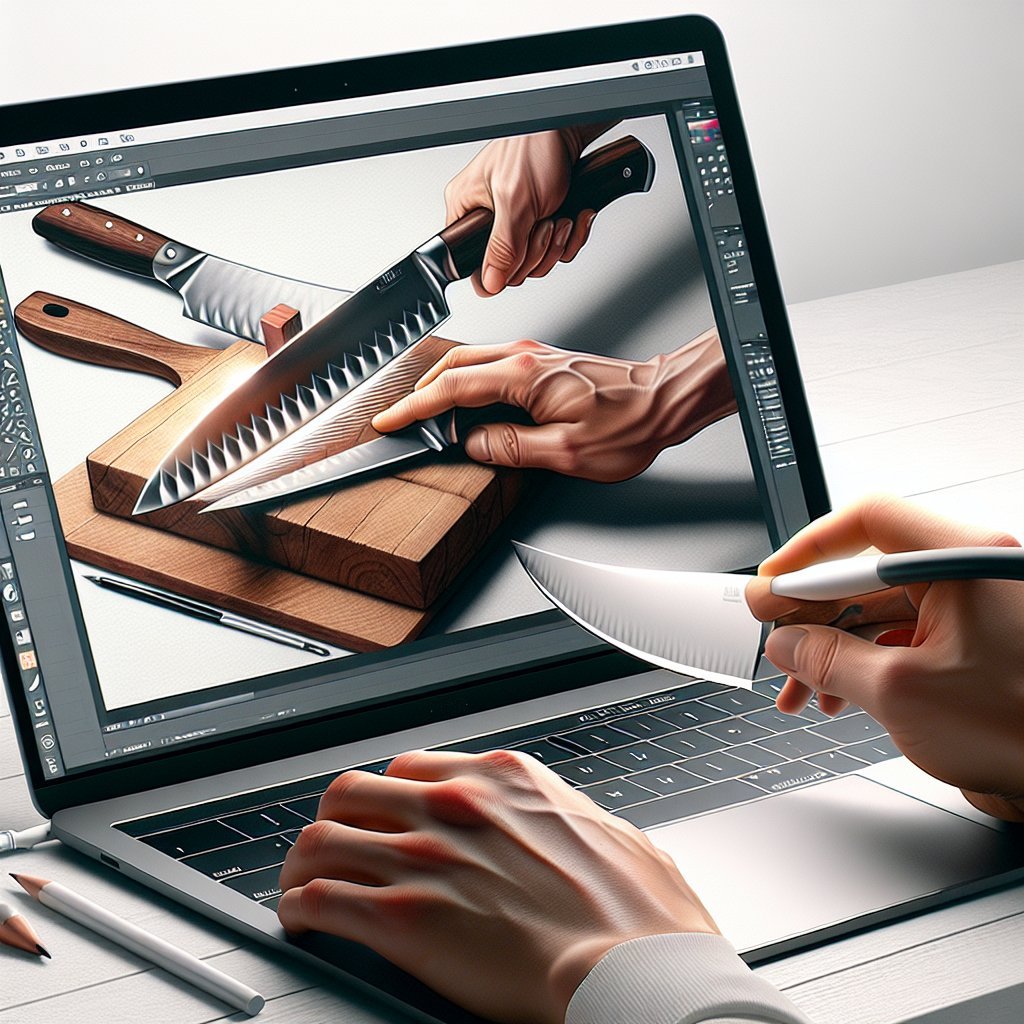
Before you begin sharpening your knives, it’s essential to gather the right tools. You will primarily need a knife sharpener—in various types, such as a whetstone, honing rod, or electric sharpener. Each tool has its own advantages and is suited for different types of knives. A whetstone provides precision and control, while a honing rod is great for maintenance. Electric sharpeners are efficient for quick sharpening but may not offer the finesse needed for high-quality knives. Also, gather a cloth to wipe the knife and a bowl of water (if using a whetstone) to keep the stone lubricated during the process.
2. Clean Your Knife
Cleaning your knife before sharpening is crucial. Use warm, soapy water to wash off any residue, grease, or food particles. Dry it thoroughly with a clean towel. A clean blade is safer to handle and gives you better results when sharpening. If your knife is particularly dirty, such as after cutting through greasy foods, ensure it is well-scrubbed to avoid any contaminations while sharpening.
3. Understand Your Knife’s Angle
Most knives have a specific sharpening angle between 15 to 20 degrees. It’s vital to maintain this angle throughout the sharpening process. For western-style knives, usually, a 20-degree angle is employed, while Asian-style knives tend to be sharpened at a 15-degree angle. You can use a protractor or find angle guides online to determine this angle correctly. Understanding the angle will help you maintain consistency and improve the effectiveness of your sharpening technique.
4. Start with a Whetstone
If you’re using a whetstone, soak it in water for about 10 to 15 minutes before you start sharpening. Place the stone on a flat surface, ensuring it’s stable and won’t move while you’re working. Hold the knife at the predetermined angle against the stone and apply light pressure while sliding the blade across the stone. Start from the base of the blade and pull the knife towards you, moving it from heel to tip. Repeat this motion about 10 strokes per side, ensuring that every part of the blade makes contact with the stone.
5. Use a Honing Rod
If you opt for a honing rod, the technique is a bit different. Hold the honing rod vertically with the tip resting on a stable surface. Hold the knife at the correct angle and swipe it down the rod, from the base to the tip of the blade. Repeat this process, alternating sides of the knife. Typically, 5 to 10 strokes on each side will suffice. This method is excellent for maintaining a sharp edge rather than doing a full sharpening.
6. Try an Electric Sharpener
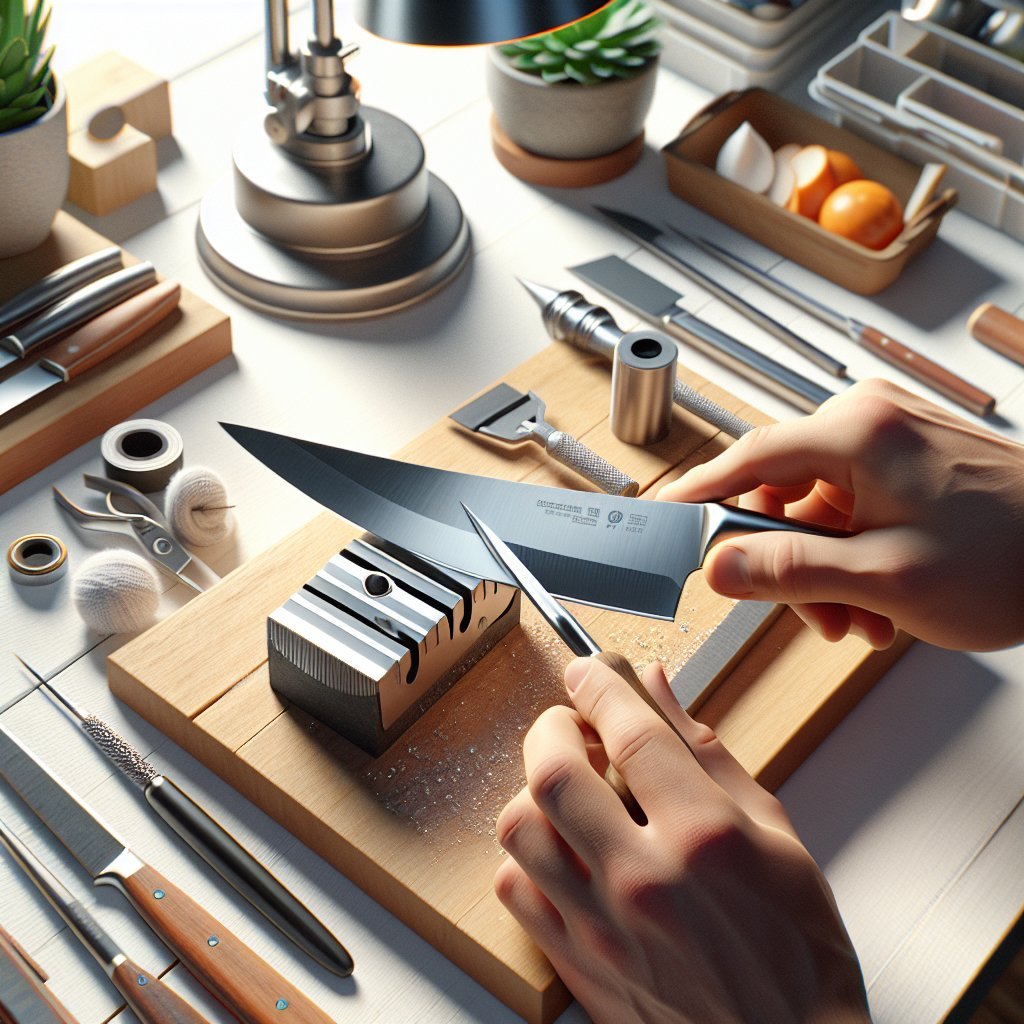
If you prefer a more high-tech approach, an electric knife sharpener can make the process quicker and easier. Read the manufacturer’s instructions carefully before use. Generally, you will insert the knife blade into the designated slot, ensuring that it sits correctly. Switch on the device and allow it to run its course; this might take just a few seconds to a minute, depending on the sharpener model. Remember, while electric sharpeners are convenient, they may not be suitable for every knife, particularly high-end or specialty blades, which require more delicate handling.
7. Test the Sharpness
After sharpening, it’s important to test the knife’s sharpness to see if you’ve achieved the desired edge. One popular method is the paper test, where you try to slice through a sheet of paper. If the knife easily cuts through without tearing, it’s sufficiently sharp. Another test is the tomato test; if your knife can cleanly slice through the skin of a tomato without crushing it, you’re in great shape.
8. Maintain Your Knife Regularly
To keep your knife in pristine condition, it’s important to maintain it regularly. Use a honing rod after each major use to straighten the edge. This habit will prolong the intervals between sharpening, making the process much easier when you do need to sharpen. Storing the knife correctly is also crucial. Consider using a knife block, magnetic strip, or blade guards to protect the edge from damage when not in use.
9. Practice Safety While Sharpening
Safety should always be your top priority when sharpening knives. Use a stable and flat surface to work on. Keep your other hand away from the blade path and use a non-slip mat under your sharpening tool if needed. Always keep the knife pointed away from you during sharpening and clean up any debris or leftovers from the process to avoid accidental cuts. Investing in cut-resistant gloves can also enhance safety during this task.
10. Consider Professional Help
While sharpening your knives at home can save you time and money, there may come a time where professional sharpening is the best option, especially for high-quality, expensive knives. Professionals have specialized tools and expertise that can rejuvenate even the dullest blades without damaging them. Research local knife sharpening services and consider scheduling regular professional maintenance for your most-used knives.
By following these ten steps, you can enhance your knife’s lifespan and performance at home. Regular sharpening and maintenance not only improve precision while cutting but also contribute to a safer cooking environment.