



Understanding Blade Types
1. Types of Blades:
Different blades require unique sharpening techniques. Kitchen knives, garden tools, scissors, and woodworking chisels all have distinct blade shapes and edge geometries. For instance, a typical kitchen knife has a slight curve, while a chisel’s edge is flat.
2. Blade Materials:
The material influences the sharpening process. Stainless steel, carbon steel, and ceramic have different hardness levels. Carbon steel holds an edge well but can rust, whereas stainless steel is tougher but requires more frequent sharpening. Understanding your blade’s material is pivotal for successful sharpening.
Essential Tools for Blade Sharpening
1. Sharpening Stones:
Water stones and oil stones are popular choices. Water stones are generally softer and easier to use, while oil stones are harder, providing a finer edge. A good starter set typically includes a coarse (200-600 grit), medium (1000-2000 grit), and fine (3000-8000 grit) stone.
2. Honing Rods:
Also known as steel, honing rods realign an edge rather than removing material. Ideal for maintaining your knives between full sharpening sessions, a honing rod prevents the edge from becoming dull.
3. Electric Sharpeners:
Electric sharpeners provide a quick, hassle-free way to sharpen blades. While they offer convenience, they can sometimes remove more material than necessary and alter the blade geometry.
Preparing for Sharpening
1. Safety First:
Before starting, ensure you’re working in a safe environment. Wear cut-resistant gloves to protect your hands, and secure the blade to avoid accidental slips.
2. Cleaning the Blade:
Start by cleaning the blade to remove any grime. Use warm soapy water followed by drying it thoroughly. A clean blade makes for a more effective sharpening session.
The Sharpening Process
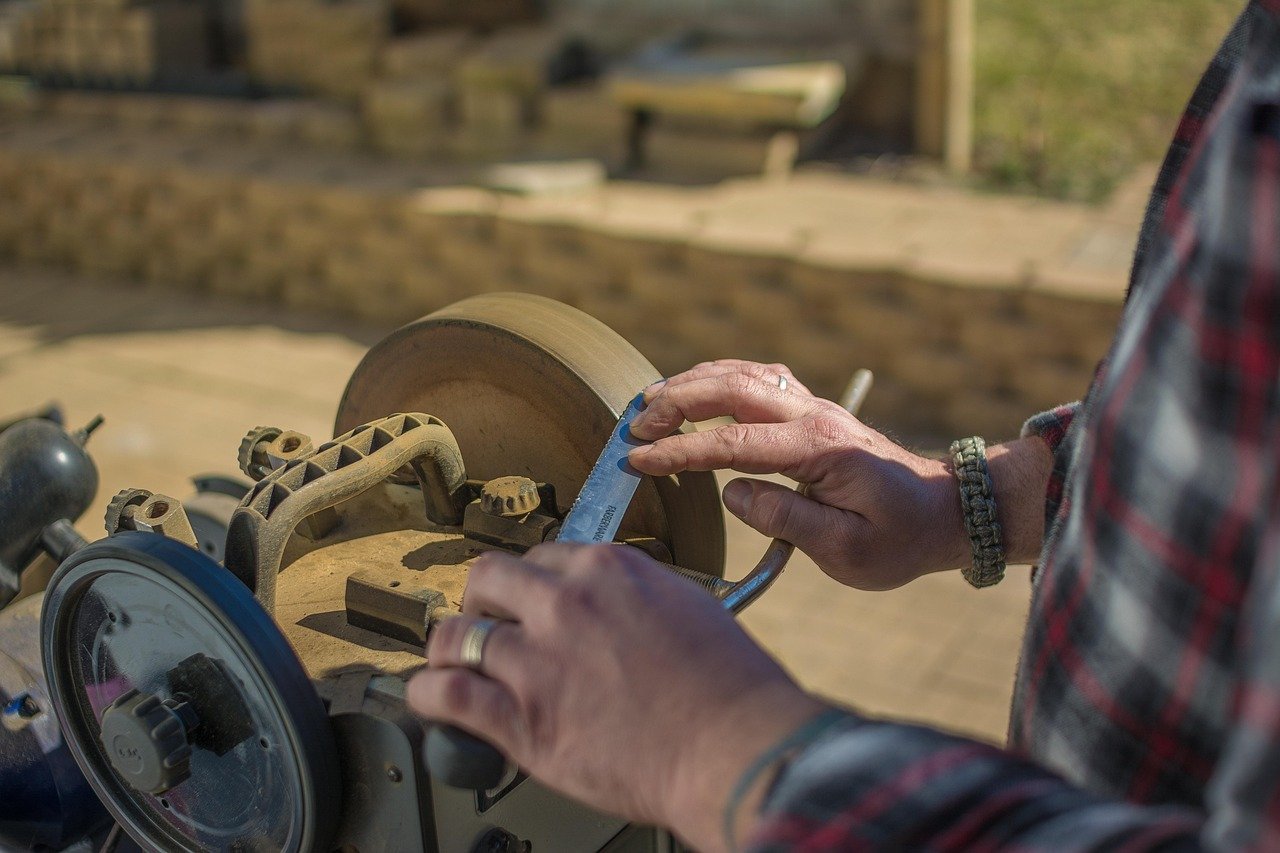
1. Using a Sharpening Stone:
- Step 1: Soak the water stone in water for about 10-15 minutes.
- Step 2: Place the stone on a stable surface. Ensure it doesn’t move when you’re applying pressure.
- Step 3: Hold the knife at a 15-20 degree angle. This angle is critical for achieving the right edge.
- Step 4: Start with the coarse side of the stone. Using moderate pressure, move the blade across the stone in a sweeping motion, starting at the heel and moving to the tip. Repeat this 10-15 times before flipping the blade.
- Step 5: Switch to the medium grit stone, repeating the process to refine the edge.
- Step 6: Finish with the fine stone to polish the edge.
2. Honing the Blade:
Use the honing rod after sharpening. Hold the rod vertically, angles at 15-20 degrees, and stroke each side of the blade down the rod. Repeat this 5-10 times on each side to realign the edge.
3. Using an Electric Sharpener:
Follow the manufacturer’s instructions closely, typically involving drawing the blade through designated slots. Use light pressure to avoid excessive material removal.
Maintenance and Aftercare
1. Cleaning the Blade Post-Sharpening:
Once sharpening is completed, wash the knife again to remove any metal filings. Dry thoroughly and apply a light coat of mineral oil to prevent corrosion, particularly on carbon steel blades.
2. Regular Honing:
Make honing a regular part of your kitchen routine, ideally before each use. This will prolong the intervals between full sharpenings, maintaining optimal cutting performance.
3. Proper Storage:
Store knives in a wood block, magnetic strip, or sheath to protect the edges. Avoid storing knives loose in a drawer, which can lead to dull blades and injuries.
Troubleshooting Common Issues
1. Burr Formation:
A burr is a small fold of metal that forms on one side of the blade during sharpening. It indicates that you’ve sharpened one side enough. Ensure to alternate sides while sharpening to minimize excessive burr development.
2. Uneven Edge:
If your blade is uneven, it might be due to improper angle maintenance. Focus on keeping a consistent angle throughout the process to avoid this common pitfall.
3. Dullness After Sharpening:
If the blade feels dull after sharpening, you may not have honed it properly. Double-check your technique and ensure you’ve used the correct grit stones in sequence.
Tips for Specific Blades
1. Serrated Knives:
Serrated blades require a different approach. Use a ceramic honing rod or a specialized serrated knife sharpener. Focus on each individual serration instead of the full blade.
2. Scissors:
To sharpen scissors, open the blades and run each against a sharpening stone or use a scissor sharpening tool, ensuring optimal edge alignment.
Learning Resources
1. Online Tutorials:
YouTube is filled with instructional videos that demonstrate various sharpening techniques. Following along can enhance your understanding and skill.
2. Books and Guides:
Consider investing in sharpening guides specific to the blades you own. These typically provide diagrams and tips suited to different blade types and materials.
3. Workshops:
Look for local workshops or classes that specialize in knife and tool sharpening. Hands-on training can dramatically enhance your skills.
Final Thoughts
Remember that sharpening is an art and can take time to perfect. Practicing regularly will build your confidence and enhance your proficiency, ultimately leading to longer-lasting and more effective blades. Cultivating the habit of DIY blade sharpening empowers homeowners to maintain not just their kitchen knives and garden tools but also instills a deeper appreciation for the tools that facilitate daily tasks.