


Step-by-Step Process for Sharpening Knives on a Whetstone
Sharpening knives on a whetstone is an art that, when mastered, can greatly improve the efficiency of your cutting tasks. To successfully sharpen a knife, it’s crucial to follow a structured approach. This guide will walk you through each step in detail, ensuring both novice and experienced sharpeners can achieve a finely honed blade.
Preparing the Whetstone
Choose the Right Whetstone
Soak the Whetstone
- Most whetstones need to be soaked before use. Immerse the stone in water for about 10-15 minutes until it is fully saturated. This helps in creating a slurry that aids in the sharpening process.
Prepare Your Workspace
- Set your whetstone on a non-slip surface. You can use a damp cloth or a rubber mat underneath to prevent it from sliding. Ensure you have adequate light for visibility.
Understanding Knife Anatomy
Familiarize Yourself with Knife Parts
- Understand the anatomy of your knife: the blade, edge, spine, tip, heel, and bolster. Focus on the edge as this is the part you will be sharpening.
Determine the Bevel Angle
- Most kitchen knives have a bevel angle between 15 to 20 degrees. Knowing this angle helps in maintaining the right sharpening technique.
The Sharpening Process
Establish the Angle
- Hold the knife at the desired bevel angle, usually between 15-20 degrees. This is crucial for effective sharpening. You can visualise this by imagining a straight line drawn from the heel of the blade to the tip.
Start with the Coarse Side
- Using the 1000-grit side of the whetstone, place the heel of the knife on the stone.
Applying Pressure
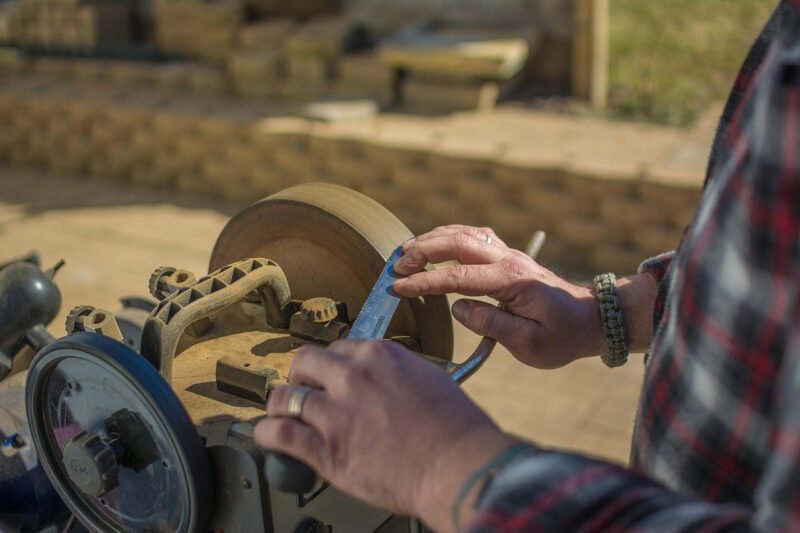
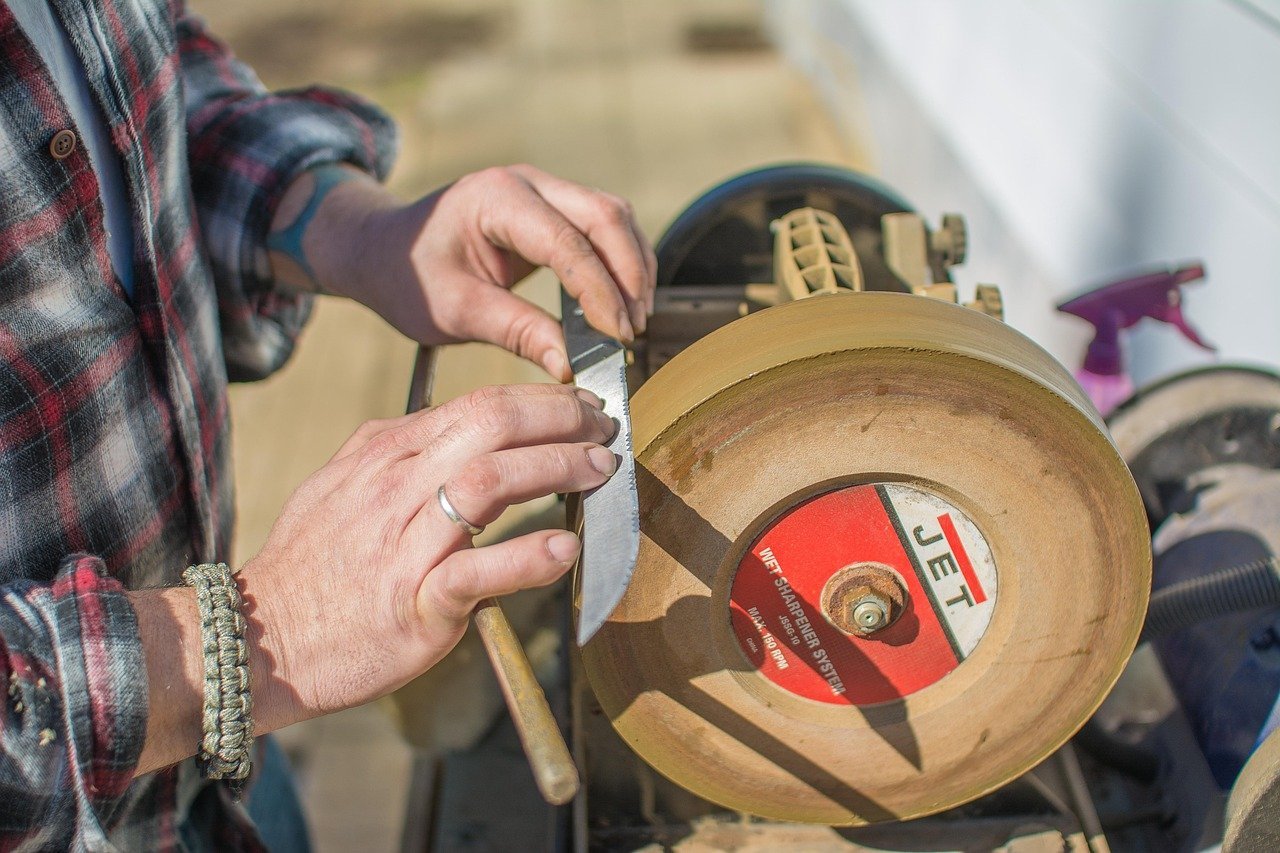
- Apply firm but controlled pressure while moving the blade across the whetstone. Start from the heel, drawing the knife towards you in a sweeping motion. Ensure to maintain the angle throughout the stroke.
Cover the Entire Edge
- Repeat the motion, covering the entire edge of the blade. Perform about 5-10 strokes on one side before moving to the next.
Switch Sides
- After completing strokes on one side, flip the knife and repeat the process on the other side. Maintain the same number of strokes for balance.
Polishing the Blade
- Transition to the Fine Side
- Turn the whetstone to the 6000-grit side. This finer grit is used to polish the edge and refine the sharpness achieved on the coarse side.
- Repeat the Sharpening Motion
- Just like before, maintain the same angle and pressure, performing 5-10 strokes per side. Feel the difference in resistance as you glide the blade over the finer grit.
- Check Your Work
- Inspect the blade for any burrs (tiny metal swells on the edge). If it feels rough or uneven, more strokes might be necessary.
Testing Sharpness
- Perform the Paper Test
- To test the sharpness, try slicing through a piece of paper. A sharp knife should glide through smoothly without tearing.
- Use the Tomato Test
- Another reliable method is to try slicing a tomato. A sharp knife will cut through the skin effortlessly, showcasing its effectiveness.
Finalizing the Sharpening Process
- Deburring the Blade
- To remove any remaining burrs, perform a few light strokes on a flat surface or use a leather strop. This finalizes the edge and adds an extra level of sharpness.
- Cleaning the Whetstone
- Rinse the whetstone under running water to remove metal shavings and debris. Allow it to dry completely before storing.
Maintaining Your Knife
- Regular Honing
- Use a honing rod regularly between sharpenings to keep the edge aligned. This prolongs the intervals between sharpening sessions.
- Proper Knife Storage
- Store knives in a knife block or a magnetic strip to protect the edge from damage caused by contact with other utensils.
- Avoid Excessive Force
- Use gentle pressure while cutting; this helps maintain the sharpness of your knife longer.
Troubleshooting Common Issues
- Uneven Edge
- If one side of the blade feels sharper after honing, adjust your technique and ensure equal pressure and angle on both sides during sharpening.
- Dull Knife After Sharpening
- If your knife still feels dull, ensure you’re using the correct angle, and that both sides receive equal attention during the sharpening process.
- Improper Technique
- Beginners may struggle with maintaining the sharpening angle. Practice on less expensive knives can help build confidence.
Conclusion
Sharpening your knife with a whetstone can seem daunting, but with practice, it becomes a straightforward ritual that not only enhances your knife’s performance but also fosters a deeper appreciation for the tools you use in the kitchen. With attention to detail and careful execution of these steps, you can develop the skill of sharpening knives to achieve professional results. Happy sharpening!