


Understanding Knife Sharpness
Before diving into the methods of sharpening knives, it’s essential to grasp what “sharpness” means. A sharp knife has a fine edge that can cut through food with minimal resistance. Over time, even the best knives can lose their sharpness due to regular use, oxidation, and improper storage. Ensuring your knife retains its sharpness is crucial for efficiency and safety in the kitchen.
Why Sharpen Your Knives?
Safety: A dull knife is more dangerous than a sharp one. It requires more force to cut, which increases the likelihood of slipping and causing injuries.
Efficiency: Sharp knives allow for cleaner, faster cuts. You’ll find that food prep becomes more enjoyable and less time-consuming.
- Preservation of Food Quality: A sharp knife will make cleaner cuts, helping to maintain the integrity of ingredients. This aids in better presentation and flavor retention.
Tools for Sharpening Knives
Various tools exist for sharpening knives at home, each with its advantages and disadvantages.
1. Sharpening Stones
- Types: Synthetic (aluminum oxide, ceramic) and natural stones (Arkansas stones).
- Using Sharpening Stones:
- Preparation: Soak synthetic stones in water for about 10-15 minutes. Natural stones typically don’t require soaking.
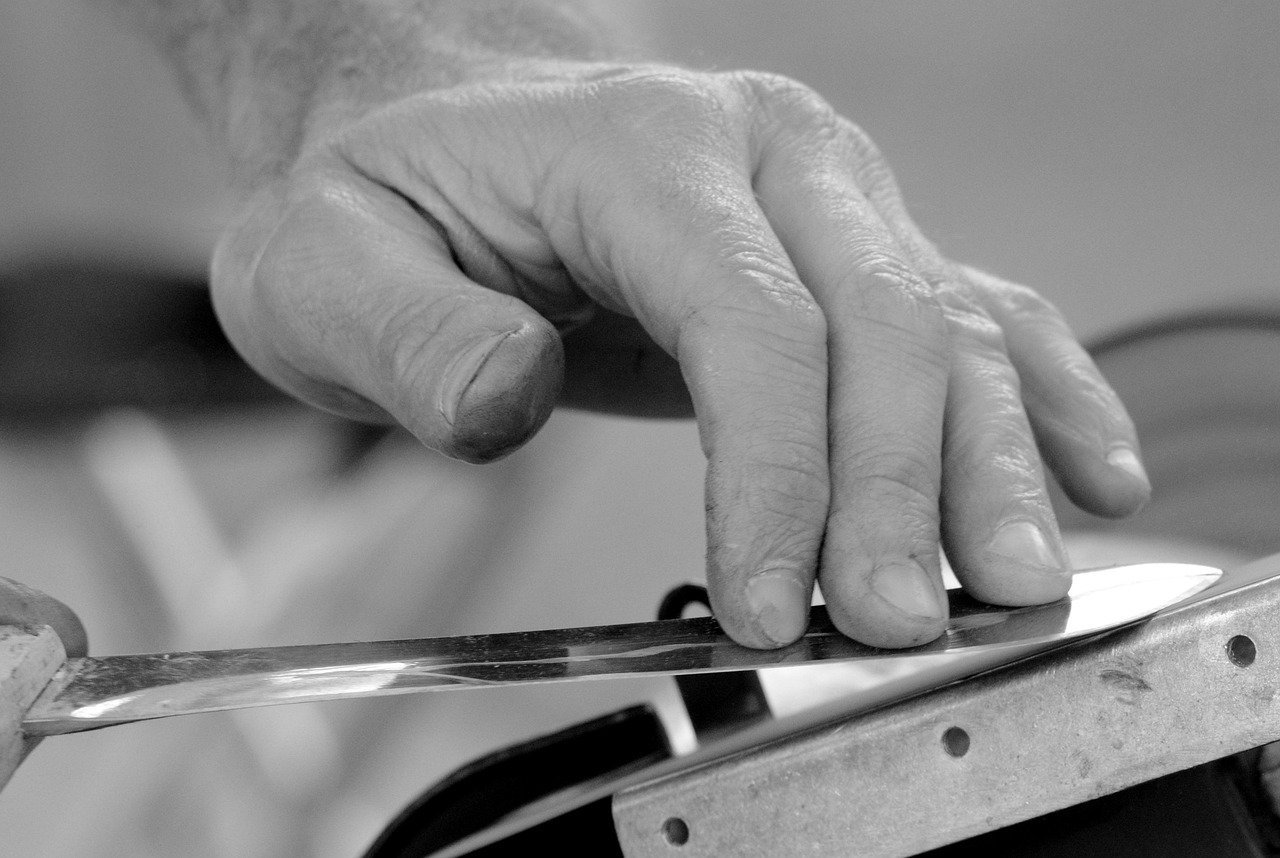
- Technique: Hold the blade at a 15-20 degree angle. Push the blade along the stone, applying even pressure.
- Motion: Use a back-and-forth motion, gradually working your way from the heel to the tip.
2. Whetstones
- Dual-sided options: Often feature 1000 grit on one side (for sharpening) and 6000 grit (for polishing).
- Using Whetstones:
- Similar to sharpening stones, maintain the angle and motion.
- Use the coarse side for significant sharpening and the finer side for honing.
3. Manual Sharpeners
- Design: Typically consist of two angled slots with carbide and ceramic rods.
- Using Manual Sharpeners:
- Insert the blade into the designated slot and pull through gently.
- Repeat this process about 3-5 times per side.
4. Electric Sharpeners
- Efficiency: Quick and easy to use, perfect for beginners.
- Using Electric Sharpeners:
- Follow manufacturer instructions, inserting the knife into the slot and allowing the machine to do the work.
- Avoid overusing, as this can remove too much metal.
5. Honing Rods (Steel)
- Purpose: Not for sharpening but for maintaining an edge.
- Using Honing Rods:
- Hold the rod vertically and position the knife at a 15-20 degree angle.
- Pull the knife down along the rod, alternating sides to realign the edge.
The Step-by-Step Sharpening Process
Determine the Edge’s Condition: Assess your knife’s edge visibly and through touch. If it slides through paper easily, it may just need honing; if it tears, it requires sharpening.
Choose Your Sharpening Method: Based on your skill level and the condition of your knives, choose one of the tools mentioned above.
Establish an Angle: The standard angle for knives is 15-20 degrees. Use a guide or a protractor to ensure accuracy.
Sharpening Technique:
- For stones, begin with the coarser grit if the knife is very dull. Begin at the heel and finish at the tip.
- For manual or electric sharpeners, insert the knife and follow the respective guidelines.
Rinse and Dry: After sharpening, rinse the knife to remove metal filings and dry thoroughly to prevent rust.
- Test for Sharpness: Slice through a piece of paper or a tomato. If it cuts cleanly, the knife has been sharpened correctly.
Maintenance for Sharp Knives
Storage: Store knives in a block, magnetic strip, or sheaths to protect the edge.
Cleaning: Hand wash your knives and immediately dry them to prevent corrosion.
Regular Honing: Use a honing steel regularly (after each use) to maintain the blade’s edge.
- Periodic Professional Sharpening: Depending on usage, consider having your knives professionally sharpened once or twice a year.
Common Mistakes to Avoid
Sharpening at the Wrong Angle: Maintaining a consistent angle is vital for an effective edge.
Pushing Too Hard: Applying excessive pressure can remove too much metal and damage the blade.
Neglecting Regular Maintenance: Remember to hone the knife after each use to prolong the sharpness.
- Sharpening Dull Knives Too Often: Over-sharpening can lead to a thinner blade, making it more prone to chipping.
How to Tell When Your Knife Needs Sharpening
Visual Inspection: Look for nicks or a dull edge.
Cutting Tests: Attempt to cut through food. If it struggles, it’s time to sharpen.
- Feel Test: Run your finger lightly along the edge (Be cautious). If the edge feels rounded instead of sharp, it’s due for a touch-up.
Conclusion
Sharpening your knives at home is a valuable skill that enhances cutting performance and maintains safety. Understanding the various methods and tools available enables you to choose the optimal approach suited to your needs, ensuring your culinary creations are effortless and enjoyable. Implementing these techniques will lead to precision in food preparation and preserve the life of your knives, making each slice smoother and more enjoyable in the kitchen. Regular maintenance and mindfulness towards your sharpening habits will keep your blades razor sharp and ready for action.