



1. Using the Wrong Sharpening Tools
One of the most crucial mistakes that individuals make when sharpening kitchen knives is selecting the wrong tools for the job. Each sharpening tool serves a specific purpose, and using the incorrect one can damage the knife or result in a subpar edge.
Whetstones: These are ideal for creating a razor-sharp edge and are preferred by many professional chefs. Whetstones come in various grits – the coarser stones (lower number) are for heavy sharpening to remove nicks or chips, while finer stones (higher number) are for honing and polishing the blade.
Honing Rods: Often confused with sharpening tools, honing rods only realign the edge of the blade rather than sharpen it. They should be used regularly between sharpenings to maintain the knife’s edge.
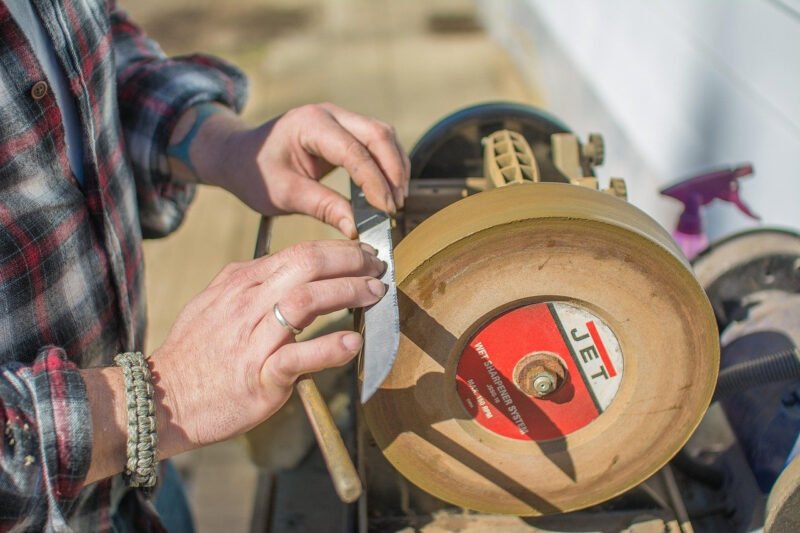
Electric Sharpeners: While they offer convenience, electric sharpeners can remove too much material from the blade and alter the knife’s angle, reducing its lifespan.
A rule of thumb is to use a whetstone for significant sharpening needs and a honing rod for regular maintenance. Assess your knives and the extent of wear to choose the appropriate tool.
2. Neglecting the Proper Angle
Another critical mistake is neglecting to maintain the correct sharpening angle. Kitchen knives generally require a sharpening angle between 15 to 20 degrees. Failure to adhere to this angle can result in a weak edge prone to chipping or dulling quickly.
Obtaining the Correct Angle: You can use a sharpening guide that attaches to the knife, ensuring a consistent angle throughout the sharpening process. If you prefer to freehand the sharpening, practice is essential to maintain steady control.
When using a whetstone, tilt your knife towards you at the required angle and maintain this throughout. Regularly checking your work can help you visualize the angle and make necessary adjustments for consistency.
3. Failing to Clean the Knife and Sharpening Surface
Before sharpening, it’s important to clean your knife and the sharpening surface. Many users skip this step, thinking it’s unnecessary or insignificant. However, residue from previous uses can hinder the sharpening process.
Cleaning the Knife: Use warm, soapy water and dry it before sharpening to prevent any gunk from interfering with the sharpening process. Additionally, grease or food particles can dull the blade and introduce uneven sharpening.
Preparing the Whetstone: For whetstones, it’s crucial to soak them in water (if they are water stones) for at least 10-15 minutes before use. This helps particles form a slurry that facilitates sharpening. Clean your stone after use to prevent embedded metal shavings and maintain its effectiveness.
Regular cleaning helps prolong the lifespan of both the knife and the sharpening tools.
4. Over-sharpening the Blade
Over-sharpening is a common mistake that can drastically shorten the lifespan of your knife. Many enthusiasts believe that the more you sharpen, the better the knife performs. In reality, excessive sharpening removes metal from the blade, which could end up altering the original design and balance of the knife.
Recognizing When to Stop: During the sharpening process, regularly check the edge of the knife by slicing through a piece of paper or a tomato. If the knife cuts cleanly, you are likely at a sufficient sharpness. Noticing burrs or deformities on the blade is a sign to halt the process.
Establish a Routine: Ideally, establish a knife maintenance routine based on usage. For instance, professional chefs might sharpen their knives every couple of days, while home cooks may only need to do so once every few weeks or months. Ensure the frequency of sharpening is in line with how often you use them.
5. Ignoring Safety Precautions
Sharpening kitchen knives involves inherent risks, and ignoring safety precautions can lead to accidents. It’s crucial to prioritize safety while sharpening to prevent injuries.
Safe Practices: Always place your whetstone or sharpening tool on a stable surface to prevent slipping. When sharpening, keep your fingers away from the blade’s path — consider using a cut-resistant glove for extra safety.
Proper Grip: Use a firm grip on the knife, but avoid excessive pressure that could lead to loss of control. The objective is to apply a gentle, consistent pressure to allow the blade to glide smoothly over the stone.
Be aware of the placement of your body; ensure that your fingers are positioned away from the sharp edge while retaining a firm grip on the knife handle. Practicing caution ensures an effective sharpening session without unwanted mishaps.
Conclusion
When sharpening your kitchen knives, the stakes are high; poor technique can not only dull your knives faster but can also lead to injuries. By avoiding these five common mistakes—using inappropriate tools, neglecting the correct angle, failing to clean, over-sharpening, and ignoring safety—you can ensure that your knives maintain their sharpness and effectiveness over time. Following these guidelines will facilitate a safe and efficient knife sharpening experience, keeping your kitchen tools in prime condition for all your cooking endeavors.