


Understanding Knife Sharpness
Before diving into the sharpening process, it’s essential to understand what blade sharpness means. A sharp knife has a finely honed edge that allows for precise cutting. The edge of a knife consists of two bevels that meet at a point; sharpening involves restoring that point. Different knives require different techniques based on their design, with Western-style knives typically featuring a 20-degree angle, while Japanese knives may have a sharper 15-degree angle.
Tools Required for Sharpening Knives
Whetstone (Sharpening Stone): Composed of abrasive materials, whetstones are available in various grits. A medium grit (around 1000) is excellent for general sharpening, while a fine grit (over 3000) is ideal for polishing the edge.
Honing Rod: This tool is used between sharpening sessions to realign the edge of your knife. It won’t sharpen a dull knife but is crucial for maintaining sharpness.
Pull-Through Sharpener: Although not as effective as a whetstone, a pull-through sharpener is convenient for quick touch-ups.
Stropping Block: Typically made of leather, this is used for polishing the edge after sharpening.
Water or Oil: Some whetstones require soaking in water or need oil for lubrication. Be sure to follow the manufacturer’s recommendations.
Cloth: For drying your knives and cleaning the sharpening tools.
Step-by-Step Knife Sharpening Process
Step 1: Gather Your Equipment
Ensure you have all sharpening tools, a clean workspace, and your knives ready. This setup will make the process smoother and more efficient.
Step 2: Assess the Knife’s Condition
Examine your knife’s blade for nicks or dullness. If the edge is extremely worn, a more rigorous sharpening approach may be necessary.
Step 3: Choose the Right Grit
If your knife is slightly dull, start with a medium grit stone (1000 to 2000). For very dull edges, begin with a coarse stone (400 to 800). Finish with a fine stone (3000 or above) to polish the blade.
Step 4: Soak the Whetstone
If using a water stone, soak it in water for about 10-15 minutes. This will help provide lubrication and facilitate easier sharpening. If using an oil stone, apply a thin layer of oil to the surface.
Step 5: Positioning the Knife
Hold the knife at the correct angle. A standard Western knife should be held at approximately 20 degrees, while a Japanese knife should be closer to 15 degrees. This angle will determine how effectively you sharpen the blade.
Step 6: The Sharpening Motion
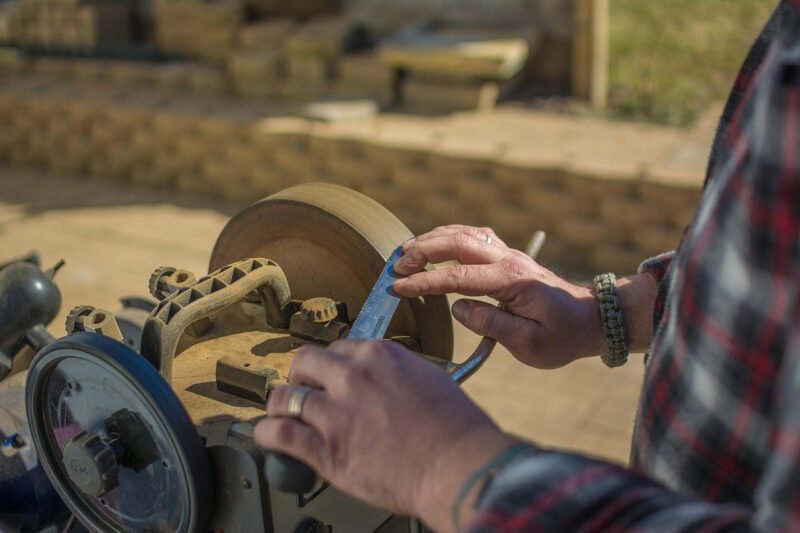
Using a Whetstone: Place the whetstone on a non-slip surface. Hold the knife’s handle with one hand while placing your other hand on the spine of the blade. Begin sharpening by pulling the edge across the stone, starting at the heel and moving toward the tip. Apply even pressure and ensure you cover the entire length of the blade. Repeat this motion 5-10 times per side.
Using a Honing Rod: Position the honing rod vertically with the tip on a stable surface. Hold the knife at the appropriate angle (20 or 15 degrees) and draw the knife down along the rod, from the heel to the tip, while alternating sides. Repeat this 5-10 times per side to align the edge.
Step 7: Check for Sharpness
Test the sharpness of your knife by slicing through a piece of paper or a ripe tomato. A well-sharpened knife should cut effortlessly. If it fails the test, repeat the sharpening process until you achieve the desired sharpness.
Step 8: Polish the Blade
Once sharpened, use a fine-grit whetstone or a stropping block to polish the edge. This step refines the blade and removes any roughness from the sharpening process.
Polishing on a Whetstone: Repeat the same sharpening motion but focus on light pressure and quick strokes. This phase helps create a finer edge.
Stropping: If using a leather stropping block, hold the knife at a slight angle and draw the blade across the leather, starting from the base towards the tip. Alternate sides to polish.
Step 9: Clean Your Knife
After sharpening, wipe the blade thoroughly with a cloth to remove any metal shavings or debris. This step ensures that your knife remains clean and reduces the risk of contamination when using it in food preparation.
Step 10: Maintenance
- Honing Regularly: Use a honing rod before each use to maintain the knife’s edge.
- Proper Storage: Store knives in a knife block, magnetic strip, or blade guards to protect the edges and prevent accidental damage.
- Periodic Sharpening: Depending on usage, sharpen your knives every few months to maintain optimal performance.
Common Mistakes to Avoid
- Using Excessive Pressure: Apply consistent, moderate pressure rather than forcing the knife against the sharpening stone.
- Incorrect Angle: Maintaining the correct sharpening angle is crucial for a successful sharpening job.
- Neglecting Safety: Always keep your fingers away from the blade’s path and use a stable surface for sharpening.
Additional Tips
- Practice on Less Expensive Knives: If you’re new to knife sharpening, consider practicing on less valuable knives to gain confidence.
- Seek Professional Help: If dealing with specialty knives or if unsure about the sharpening process, consider taking your knives to a professional sharpener.
- Research Different Techniques: Explore various sharpening methods tailored for different knife types, such as Japanese versus Western knives.
Conclusion of the Process
Sharpening your knives at home is an art that requires practice and patience but yields rewarding results. By following these steps, you can maintain a fleet of sharp knives ready for any culinary task.