



Understanding Knife Sharpness
A sharp knife is essential for efficient and safe cooking. Dull knives require more force, leading to accidents and uneven cuts. Understanding what knife sharpness entails will ensure your culinary tasks are executed smoothly.
The Importance of Knife Maintenance
Regular maintenance of your knives not only improves their performance but also extends their lifespan. Dull knives can damage food, leading to uneven cooking and loss of flavor.
Tools You’ll Need
To sharpen your knives effectively at home, you’ll require specific tools. Here’s a guide to the essential items:
1. Whetstone (Water Stone)
Whetstones come in various grits, typically ranging from coarse (around 200-600 grit) for damaged edges to fine (1000-3000 grit) for honing. They are used in a systematic way to create a sharp edge.
2. Honing Steel
Honing steel, often included in knife sets, is not a sharpener but a tool to maintain the edge. Periodic use helps realign the knife’s edge, keeping it sharp between sharpenings.
3. Electric Sharpener
Electric sharpeners provide quick results but may remove more material from the blade than necessary. They often come with preset angles, making them suitable for beginners who may struggle with manual methods.
4. Manual Pull-Through Sharpener
These are compact and handy, often featuring multiple sharpening stages. They are less versatile compared to whetstones but are user-friendly for novice sharpeners.
5. Leather Strop
A strop is used after sharpening to polish and refine the edge, resulting in a razor-sharp finish. It’s an optional tool but great for enhancing the sharpness.
Preparing to Sharpen
Before beginning the sharpening process, take the following preliminary steps:
1. Clean Your Knife
Ensure your knife is free from residue or grease. A clean knife is easier to handle and ensures you get a good grip during sharpening.
2. Set Up Your Workspace
Choose a clean, stable surface with good lighting and a non-slip mat or cloth to prevent accidents. If using a whetstone, soak it in water for about 10-15 minutes to avoid damaging the stone and to aid in the sharpening process.
Sharpening Techniques
Sharpening with a Whetstone
Determine the Angle:
Most kitchen knives are sharpened at an angle of 15-20 degrees. Maintaining this angle is essential for an effective sharpening session.Coarse Side First:
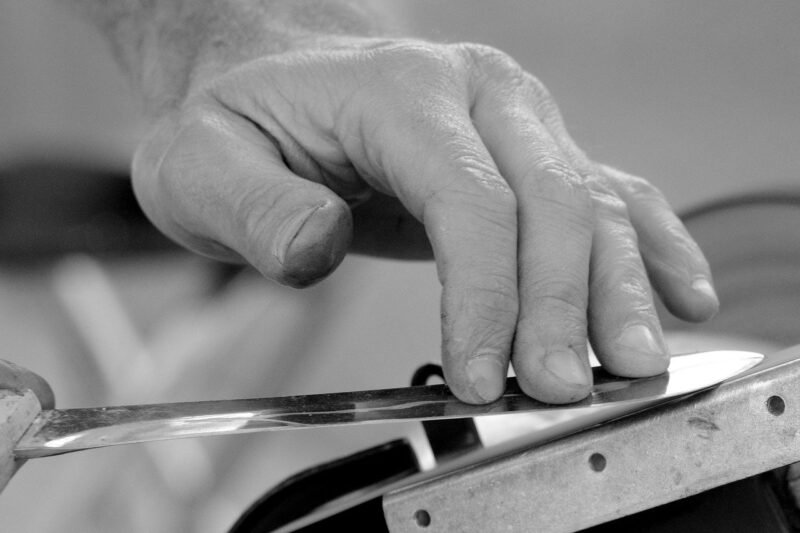
Start with the coarse side. Place the heel of the knife against the stone and push forward while applying light pressure.Systematic Motion:
Move the knife in a sweeping motion from heel to tip, making sure to cover the entire blade. Repeat this process 5-10 times on each side.Switch to Fine Grit:
Flip the stone to the fine grit side. Repeat the same technique, maintaining the same angle. This step refines the edge to a sharper finish.Test Your Edge:
After sharpening, test the knife by slicing through a piece of paper. A sharp knife will cut cleanly without tearing.
Honing with a Honing Steel
Hold the Steel Vertically:
Position the honing steel upright on a stable surface.Position Your Knife:
Hold the knife at a 15-20 degree angle against the steel.Swipe the Knife:
Starting at the heel, swipe the knife down along the steel towards the tip. Alternate sides, ensuring equal strokes for balanced sharpness.Repeat Regularly:
Incorporate honing into your routine after each use to maintain the blade’s edge.
Using an Electric Sharpener
Follow Instructions:
Each electric sharpener may have different guidelines; it’s essential to read and follow them for optimal use.Insert the Knife:
Place the knife into the sharpened slot, usually labeled with specific angles.Let the Machine Do the Work:
Gradually pull the knife through the machine as directed, often requiring just a few passes on each side.
Manual Pull-Through Sharpener
Align Your Knife:
Position the knife’s blade into the designated slot.Draw the Knife Through:
Pull the knife through in a smooth, even motion, ensuring you apply light pressure only.
Final Touches
Leather Strop Technique
For those who want a polished edge, using a leather strop can help achieve a razor-sharp finish:
Apply Compound (Optional):
If using a strop that allows for it, apply a honing compound to the leather.Angle the Knife:
Hold the knife at the same angle used for sharpening.Gentle Strokes:
Pull the blade backward across the leather, keeping the edge against the strop’s surface.Alternate Sides:
Flip the knife over and repeat to ensure both sides get equal treatment.
Troubleshooting Common Issues
Dull Knives After Sharpening
If your knives remain dull post-sharpening, ensure that you:
- Maintained the correct angle throughout the process.
- Used the appropriate grit for the level of dullness.
Snagging During Use
If your knife catches or snags when you cut, it may need to be honed. Use a honing steel regularly between sharpenings.
Safety Tips
Always prioritize safety when sharpening knives.
- Keep fingers clear of the blade’s path.
- Use a stable surface.
- Store knives securely when not in use.
Frequency of Sharpening
How often you should sharpen your knives varies based on usage. Daily or heavy usage may require sharpening every one to two weeks, whereas infrequent use might call for sharpening once a month.
Maintaining Your Knives
Cleaning
Always wash your knives by hand with warm soapy water. Avoid soaking and placing them in dishwashers, as this can cause damage.
Storage
Store knives in a knife block, magnetic strip, or blade guards to protect the edges and prevent accidents.
Regular Inspection
Periodically check knives for chips or dullness. Address these issues promptly to ensure optimal performance in the kitchen.
Embracing the art of knife sharpening empowers you to maintain essential tools in your kitchen while enhancing your culinary skills. With practice, you can achieve a professional level of sharpness that will revolutionize your cooking experience.