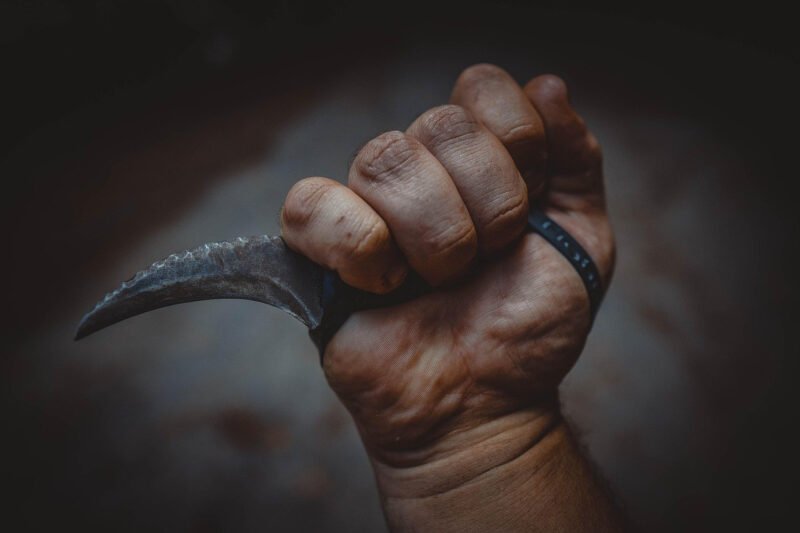




The Anatomy of a Dagger: Understanding Its Components
1. Blade
At the heart of every dagger is its blade, which varies significantly in shape, size, and material, all contributing to its intended use and aesthetics. The blade typically ranges from five to twelve inches in length. The shape can be categorized into several types, including straight, curved, or double-edged.
Blade Materials
Traditionally, dagger blades are forged from high-carbon steels, which provide a good balance of hardness and flexibility. Modern designs may incorporate stainless steel or specialized alloys that enhance durability and corrosion resistance.
Blade Edge Types
The cutting edge can feature a plain edge, which provides a smooth cutting surface, or a serrated edge, which excels at cutting through tougher materials. In some cases, a dagger may have a tanto edge, which combines a chisel point with an acute angle, perfect for piercing.
Full Tang vs. Partial Tang
A crucial aspect of a dagger’s construction is whether it has a full tang or partial tang. A full tang blade extends the full length of the handle, offering superior strength and balance, while a partial tang may only extend partway. Full tang daggers tend to be more durable and are better suited for demanding applications.
2. Hilt
The hilt is the handle of the dagger and is vital for grip and control. Often designed ergonomically, the hilt allows for confident handling in various situations, from self-defense to tactical maneuvers.
Materials Used
Hilt materials can vary drastically, including wood, metal, plastic, or rubber. Wood may be polished for aesthetic appeal, while rubber or textured materials ensure a non-slip grip.
Grip Design
The design of the hilt can significantly impact usability. Options range from a simple cylindrical grip to more complex shapes that contour to the hand. Features such as finger grooves or pommels can enhance control, especially in high-stress situations.
Guard and Pommel
The guard, often situated between the blade and hilt, serves to protect the user’s hand from sliding onto the blade during use. A cross-guard is common in more traditional or combat-oriented daggers. The pommel, found at the end of the hilt, may serve as a counterbalance, enhancing grip stability. In some designs, it can also function as an impact tool, providing added functionality.
3. Point
The point of a dagger is crucial for its stabbing capability. Dagger points are typically designed to penetrate rather than cut.
Types of Points
Common point types include the needle point, which is exceptionally sharp and ideal for precision stabbing, and the tanto point, characterized by its strong tip that excels at piercing tough materials. Some daggers may also feature a swept point for a wider cutting surface, combining slashing and stabbing functionalities.
Point Geometry
The angle and sharpness of a dagger’s point are critically assessed in terms of performance. A more acute angle allows for easier penetration but may be less durable under stress, while a blunter angle sacrifices some stabbing efficiency for increased robustness.
4. Blade Thickness and Profile
The thickness of the blade affects both its performance and its ability to withstand force.
Thickness Variations
Typically, dagger blades range from 2 mm to 5 mm in thickness. Thicker blades offer robust strength but may be less agile, making them harder to maneuver quickly. Thinner blades are more suited for quick thrusting motions but may be susceptible to bending or breaking under heavy impact.
Profile Contour
The profile of the blade can significantly influence its cutting performance. A chamfered edge aids in reducing drag during cutting. Meanwhile, a hyperbolic or tapered design can improve penetration power without compromising the blade’s structural integrity.
5. Sheath
The sheath is as important as the blade itself, providing protection for the blade and user. It often complements the dagger’s aesthetics while offering practical benefits.
Material Composition
Sheaths may be crafted from leather, Kydex (a thermoplastic), or wood, serving both protective and decorative purposes. Leather sheaths are traditional and can be aesthetically pleasing but may require more maintenance due to environmental exposure. Kydex offers durability and moisture resistance, while wooden sheaths might be used for display purposes.
Retention Mechanisms
An effective sheath usually features some form of retention mechanism, whether it is a snap closure, friction fit, or magnetic hold. This ensures that the dagger remains securely in place when not in use.
6. Balance
The balance of a dagger refers to how weight is distributed between the blade and hilt. An ideally balanced weapon allows for greater control and agility.
Balance Points
A well-balanced dagger will have its balance point close to the guard, allowing for smooth transitions between thrusting and slashing motions.
Impact on Use
Different applications may demand different balance profiles. Tactical daggers often favor a blade-heavy balance to enhance piercing power, while utility dagger designs may favor a handle-heavy balance for improved control during extended use.
7. Design Influences
Dagger design can differ based on cultural, historical, and functional influences.
Cultural Design Elements
For example, the traditional stiletto is characterized by its slim blade and needle-like point, historically used for assassination due to its ability to penetrate vital organs discreetly. On the other hand, the kris features a wavy blade that holds cultural significance in various Southeast Asian societies, serving not just as a weapon but also as an artifact of artistic expression.
Functional Specializations
Certain daggers are designed with specific functions in mind, such as the boot knife, which features a compact, concealed design for personal defense, or the chef’s knife, which, although primarily a kitchen tool, resembles daggers in its symmetric design.
8. Maintenance
Proper maintenance of a dagger is crucial for ensuring its longevity and functionality.
Sharpening
Regular sharpening with whetstones or honing rods keeps the blade in optimal cutting condition. Special attention should be paid to the angle at which the edge is sharpened to maintain its geometry.
Cleaning
After use, especially in outdoor or combat situations, it’s essential to clean the blade to prevent rust and degradation. A gentle wipe with a soft cloth and a light coat of oil can go a long way in protecting the metal.
Storage
When storing a dagger, ensure it is kept in a sheath, away from moisture and dust. Humid environments can accelerate corrosion, whereas dry storage ensures the blade remains pristine.
9. Legal Considerations
Owning and carrying a dagger can be subject to various legal frameworks depending on jurisdiction.
Regulatory Variations
Some regions impose restrictions on blade length, type, or intent to carry. It is essential to familiarize oneself with local laws to avoid legal repercussions.
Safety Practices
Adhering to safety standards not only ensures compliance but also fosters a responsible culture among dagger owners. Safe handling practices, such as not brandishing or displaying the weapon in public spaces, are crucial.
10. Conclusion
Understanding the intricate components of a dagger reveals the blend of art and science that goes into its design. From blade configuration to hilt design, each element contributes to the dagger’s effectiveness, usability, and cultural significance. This comprehensive analysis of a dagger not only enhances appreciation for this historical weapon but also empowers users to make informed decisions in their selection, maintenance, and care.