


Step 1: Gather Your Materials
To sharpen your knife without a traditional sharpening tool, it’s essential to have some readily available materials. Here’s a list of items you can use:
- Coffee Mug or Plate: The unglazed bottom of a ceramic coffee mug or plate works as an abrasive surface.
- Leather Belt: A sturdy leather belt can serve as a strop for finishing your knife edge.
- Newspaper: The coarse texture of old newspaper can also be used for honing your knife.
- Sandpaper: Different grits of sandpaper (preferably from 400 to 2000) can be employed for rough and fine sharpening.
Before you start, ensure that you are in a well-lit, comfortable workspace where you can focus on the task.
Step 2: Assess the Blade’s Condition
Before sharpening, it’s crucial to examine your knife closely. Look at the edge for nicks, dullness, or inconsistencies. A good test is to try cutting through a piece of paper. If the knife struggles or tears the paper, it undoubtedly needs sharpening. If there are significant chips, consider utilizing a more aggressive sharpening method before these alternative techniques.
Step 3: Prepare Your Cutting Surface
For most sharpening techniques, you’ll need a flat surface to work on. Ensure that your coffee mug, plate, or any chosen surface is firmly placed on a stable table to prevent slips during the sharpening process. If using sandpaper, lay it flat on the table to reduce movement.
Step 4: Utilizing the Coffee Mug Method
Choose the Right Angle: Hold your knife at about a 20-degree angle against the unglazed bottom of the coffee mug.
Sharpen the Edge: Run the knife along the edge of the mug with steady pressure. Start from the heel (the part closest to the handle) and move towards the tip. It’s important to keep the same angle throughout the process.
Repeat the Process: Make 5-10 strokes on one side, checking the sharpness frequently. Once you feel comfortable, switch to the other side.
Check the Edge: After working both sides, test the sharpness again using the paper-cutting method.
Step 5: Sandpaper Technique
If the coffee mug technique hasn’t yielded the desired sharpness, you can move to sandpaper:
Choose Grit: Start with lower grit (around 400) if the blade is severely dull.
Set the Sandpaper: Lay it flat on a stable surface. Keep the sandpaper stable with your non-dominant hand.
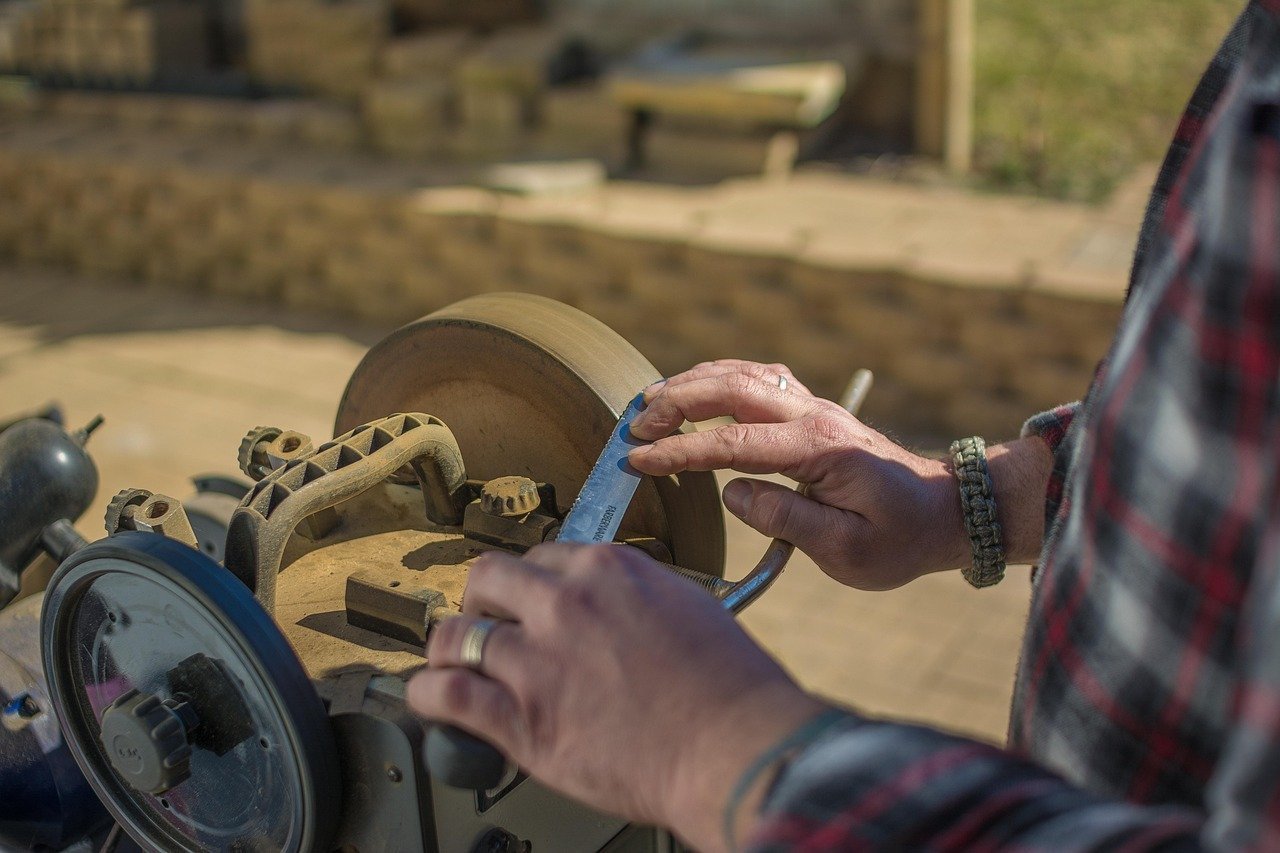
Sharpen: Holding the knife at a consistent angle similar to the mug method, move the knife across the sandpaper from heel to tip and repeat this on both sides.
Increase Grit: After gaining a sharper edge with the lower grit, switch to finer grits (1000 to 2000) for a smooth finish.
Final Test: Always test the knife’s sharpness with a piece of paper after the final passes.
Step 6: Strop with a Leather Belt
Once your knife is sharpened, it’s time to refine the edge using a leather belt:
Choose the Right Side: Make sure to use the flesh side of the leather belt, as this texture will help polish the blade.
Angle and Strop: Hold the knife at a 15-degree angle while sliding the edge across the leather, alternating sides with each stroke.
Repeat: Perform several passes, about 5-10 on each side. This step helps remove any microscopic burrs left from previous sharpening steps.
Step 7: Newspaper Honing Technique
If you have an old newspaper on hand, it can be an effective final step:
Tear the Newspaper: Cut a strip of newspaper about 10-12 inches long.
Honing Motion: Holding the newspaper taut, draw the knife edge across the paper. Start at the heel, moving towards the tip, and repeat several times on both sides.
Assessment: After honing with the paper, a clean cut through another newspaper should indicate that the knife is now sharp.
Step 8: Maintain Your Knife Properly
To keep your knife sharp longer, consistent maintenance is key:
- Clean After Use: Always wash and dry your knife after each use to prevent corrosion and dulling.
- Safe Storage: Store your knives in a block, sheath or magnetic strip to prevent scratches and dings.
- Regularly Hone: Use your leather belt or newspaper every few uses to realign the edge before resorting to sharpening.
Step 9: Practice Safety Measures
Knife safety cannot be overstated. When handling and sharpening knives, always be mindful of your fingers and use a cutting board to prevent accidental slips. Always cut away from yourself, and store the knife properly when not in use.
Step 10: Learning and Improving
Sharpening knives can be an acquired skill that improves with practice. Watch various videos or attend workshops to expand your techniques. From maintaining proper angles to varying your stroke length and pressure, refining your approach can significantly enhance your knife skills over time. The more you experiment with different materials and methods, the more adept at knife sharpening you’ll become.
By following these steps, you can effectively sharpen your knives without the need for specialized tools, ensuring that you always have a reliable cutting instrument on hand.