



The Importance of Knife Maintenance
A well-maintained kitchen knife is one of the most valuable tools a cook can have. Not only do sharp knives enhance the cooking experience by allowing for cleaner cuts and more control, but they also improve safety by minimizing the risk of slips and accidents. Thus, having the right tools for maintaining your knives is essential.
1. Honing Rod
A honing rod, also known as a sharpening steel, is an essential tool for maintaining the sharpness of a knife’s edge between sharpening. It is typically made of steel, ceramic, or diamond. The primary purpose of the honing rod is to realign microscopic teeth on a knife’s edge, which can become misaligned during regular use.
How to Use It:
- Hold the honing rod vertically, with the tip resting on a stable surface.
- Position the knife at a 20-degree angle against the rod.
- Pull the knife downwards along the rod, moving from heel to tip.
- Repeat this process 5-10 times on each side of the blade.
2. Whetstone
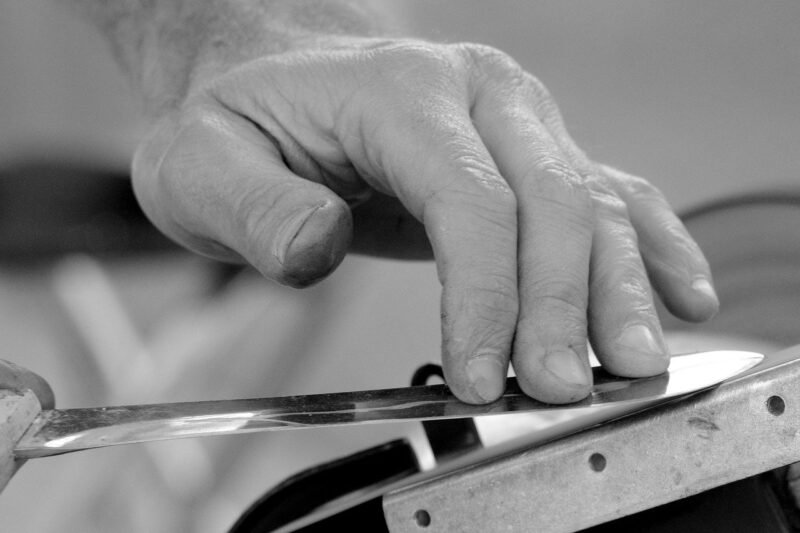
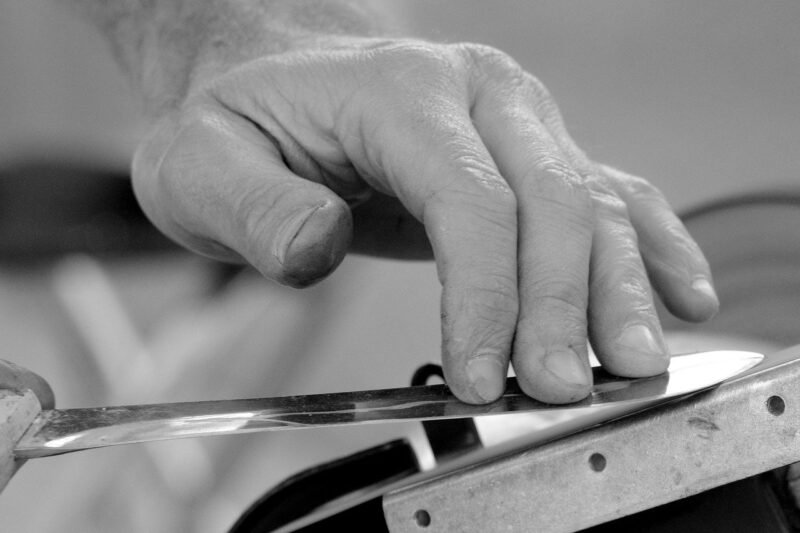
A whetstone, or sharpening stone, is an essential for anyone looking to bring their dull knives back to life. Available in various grits, a whetstone allows you to sharpen your knife to a finer edge.
Grit Levels:
- Coarse (200-600 grit): Used for repairing edges and reshaping damaged blades.
- Medium (600-1000 grit): Ideal for regular sharpening.
- Fine (1000-3000 grit): For honing and polishing the edge.
- Super Fine (4000-8000 grit): For achieving a razor-sharp finish.
How to Use a Whetstone:
- Soak the whetstone in water for about 10-20 minutes (if using a water stone).
- Place the stone on a non-slip surface.
- Hold the knife at a consistent angle, ideally around 20 degrees.
- Gently push the blade across the stone, alternating sides until sharp.
3. Electric Knife Sharpener
For those who prefer automation, an electric knife sharpener is a convenient tool. These devices use motorized grinding wheels to quickly and efficiently sharpen knife blades.
Benefits:
- Fast operation, making it ideal for busy kitchens.
- Consistent sharpening angles, resulting in uniform edge quality.
- User-friendly design, often requiring little more than to insert the blade.
4. Manual Knife Sharpener
A manual knife sharpener is a hybrid option that combines simplicity with effectiveness. Typically featuring two slots, one for coarse and one for fine sharpening, these can be a great mid-range option.
How to Use:
- Place the knife in the designated slot.
- Pull the knife through the sharpener from heel to tip.
- Switch sides and repeat.
5. Knife Block or Magnetic Strip
While not directly a sharpening tool, proper storage is crucial for maintaining knife sharpness. A knife block or magnetic strip helps protect the knife edges from damage caused by contact with other utensils.
Benefits of a Knife Block:
- Provides individual slots for each knife, minimizing edge-dulling contact.
- Stabilizes the blade to prevent accidental trips and falls.
Benefits of a Magnetic Strip:
- Saves counter space and keeps knives visible.
- Allows for easy access and storage, promoting proper blade care.
6. Leather Strop
A leather strop is a traditional tool used in professional kitchens for final edge honing. It also helps remove any burrs from the blade after sharpening.
How to Use a Leather Strop:
- Apply a modest amount of honing compound to the strop’s surface.
- Hold the knife at a low angle against the leather.
- Pull the knife away from the edge, alternating sides after several strokes.
7. Dishwasher Safe Knife Care
To maintain a knife’s integrity, it’s important to note that most professional-grade kitchen knives are not dishwasher-safe. Therefore, having a good quality sponge, mild detergent, and drying cloth is essential for their immediate care after use.
Handwashing Steps:
- Immediately rinse the knife under warm water post-use.
- Apply soap directly to a sponge and clean the blade.
- Rinse and dry the knife promptly to prevent corrosion.
8. Knife Guard
Investing in high-quality knife guards is another way to prevent blade damage. These protectors fit over knife edges, making them safe for storage in drawers or bags.
Benefits:
- Prevents accidental cuts during storage.
- Helps maintain sharpness by protecting the blade from friction against other tools.
9. Quality Cutting Boards
The type of cutting board you use can influence the longevity and sharpness of your knives. Plastic or glass boards can dull blades quickly; however, wood or bamboo options are less abrasive.
Advantages of Wooden Cutting Boards:
- Softer surface reduces the wear on knife edges.
- Naturally anti-bacterial and easy to maintain with oiling.
10. Mineral Oil
Applying food-safe mineral oil on wooden cutting boards can help maintain their appearance and longevity. It’s essential to treat your cutting boards regularly to prevent cracking and warping.
Application Steps:
- Clean the board thoroughly and let it dry.
- Pour a small amount of mineral oil onto the board.
- Spread it evenly with a soft cloth and let it absorb for a few hours.
11. Knife Maintenance Schedule
A regular maintenance schedule is beneficial for knife longevity. Setting aside time monthly for honing, sharpening, and cleaning ensures optimal performance.
Suggested Schedule:
- Monthly: Whetstone sharpening and thorough cleaning.
- Weekly: Honing and checking for any visible damage.
- After Every Use: Immediate dishwashing and drying.
12. Learn and Observe
Finally, enhancing your knowledge of knife care involves continuous learning. Reading books, watching online tutorials, and asking professionals for tips can help elevate your skills.
Recommended Resources:
- Online videos by professional chefs focusing on knife skills.
- Books detailing knife care and techniques.
The usage of these essential tools not only streamlines your kitchen processes but also contributes significantly to the longevity and efficiency of your culinary tasks. By investing time and resources into maintaining your knives, you’re enhancing your overall cooking experience, ensuring delightful dishes with precision cutting, and fostering a safer kitchen environment.