


Understanding Knife Anatomy
Before sharpening, it’s essential to understand the anatomy of a knife to ensure proper maintenance. Key features include:
- Blade: The cutting edge of the knife.
- Spine: The top, non-cutting side of the blade.
- Edge: The sharpened side of the knife used for cutting.
- Tip: The pointed end of the blade used for detailed work.
- Heel: The rear part of the blade, ideal for chopping.
- Handle: The grip part of the knife, which should be comfortable for safety during use.
Tools You Will Need
Before you start sharpening your knives, ensure you have the following tools on hand:
- Whetstone: A flat stone made of abrasive material. It’s available in various grits, such as coarse (200–600 grit), medium (800–2000 grit), and fine (3000+ grit).
- Knife Sharpener: This can be electric or manual. Choose a reputable brand to ensure quality.
- Angle Guide: This helps maintain the proper sharpening angle, usually between 15 to 20 degrees.
- Cloth or Towel: For wiping down the blade.
- Water or Oil: Depending on the type of whetstone used—water for water stones and oil for oil stones.
Preparing Your Workspace
- Choose a Stable Surface: Utilize a flat and stable surface such as a countertop or kitchen table. Clear the area of unnecessary items for safety.
- Gather Your Tools: Organize your tools to have everything within reach. This will minimize distractions and enhance focus.
- Wear an Apron: Consider wearing an apron to protect against oil or water spills.
Safety First
- Always Handle Knives Carefully: Keep the knife pointed away from yourself and others. Always cut away from your body.
- Secure the Whetstone: If using a whetstone, place a damp cloth underneath to prevent slipping while you sharpen.
- Use Cut-Resistant Gloves: Wearing cut-resistant gloves adds an extra layer of safety when handling knives.
Step-by-Step Sharpening Process
Step 1: Determine the Blade’s Condition
Examine your knife closely. If it requires only minor touch-ups, a finer grit may suffice. For a dull blade, begin with a coarser stone. Test the knife’s edge by slicing through a piece of paper; if it drags, it needs sharpening.
Step 2: Soak the Whetstone (if applicable)
If you are using a water stone, soak it in water for about 10-15 minutes before sharpening. This helps create a slurry that will aid in sharpening. For oil stones, apply a thin layer of honing oil on the surface.
Step 3: Position the Knife
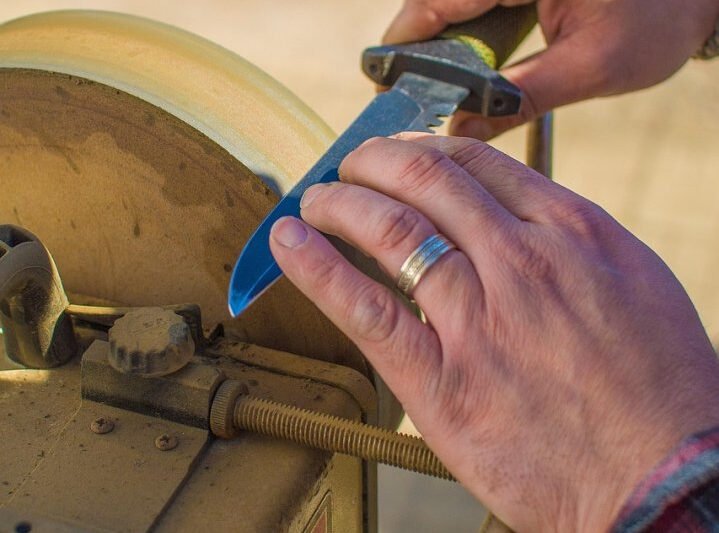
Use an angle guide or your own judgment to maintain a consistent sharpening angle of about 20 degrees. Position the heel of the knife against the whetstone.
Step 4: Begin Sharpening
Starting with the Coarse Side (if applicable):
- Hold the knife firmly with one hand and apply moderate pressure.
- Starting from the heel, glide the blade down the stone towards the tip in a sweeping motion, ensuring you cover the full length of the edge.
- Repeat this process 5-10 times, ensuring consistent angle and pressure.
Switch to the Fine Side: After using the coarse side, flip the stone to its fine grit.
- Repeat the same motion as above, but with lighter pressure to refine the edge.
- Focus on smoother, lighter strokes to hone the blade.
Step 5: Alternate Sides
To maintain balance in the blade, always sharpen both sides consistently.
- Sharpen Left Side First: Using the same technique, sharpen the left side of the knife.
- Switch to Right Side: Repeat the process, ensuring an even amount of sharpening on both sides.
Step 6: Test the Edge
Once you have sharpened both sides, test the edge’s sharpness on a piece of paper or a tomato. A well-sharpened knife should slice smoothly and effortlessly.
Step 7: Polish the Edge
To achieve a razor-sharp finish, you may use a leather strop. Gently pull the blade across the strop, alternating sides to remove burrs and refine the edge further.
Step 8: Clean the Knife
After sharpening, clean the knife using warm, soapy water and a towel to remove any residue or particles. Dry it thoroughly to prevent rust.
Step 9: —Store Your Knife Properly
Avoid storing knives in drawers where they can get damaged. Instead, opt for:
- Knife Blocks: Provide safe, visible storage, protecting the blades from dulling.
- Magnetic Strips: Keep knives handy and secure while displaying them prominently.
- Blade Guards: These can be slipped over individual knives for drawer storage.
Maintenance Tips
- Regular Sharpening: Sharpen your knives periodically based on usage. Frequent, light sharpening maintains the edge better than infrequent, heavy sharpening.
- Correct Cutting Surface: Use cutting boards made of wood or plastic to maintain the knife edge. Avoid glass, ceramic, or metal surfaces.
- Avoid Dishwashers: Never place knives in dishwashers as the heat and abrasiveness can dull and damage them.
Conclusion
Good knife maintenance reflects upon your cooking skills and safety in the kitchen. Adopting this sharpening technique will help you sustain blade sharpness while ensuring your kitchen remains safe and efficient.