


Understanding Knife Sharpness
Before delving into the sharpening process, it’s essential to understand knife sharpness. A sharp knife reduces the effort needed for cutting and provides better control, ensuring safety while cooking. The edge of a knife is formed by two surfaces that meet at a point called the edge; maintaining these edges through regular sharpening is crucial.
Tools You’ll Need
- Whetstone: The most popular sharpening tool. Look for a dual-sided stone (one coarse, one fine).
- Honing Rod: A metal rod that helps realign the knife’s edge.
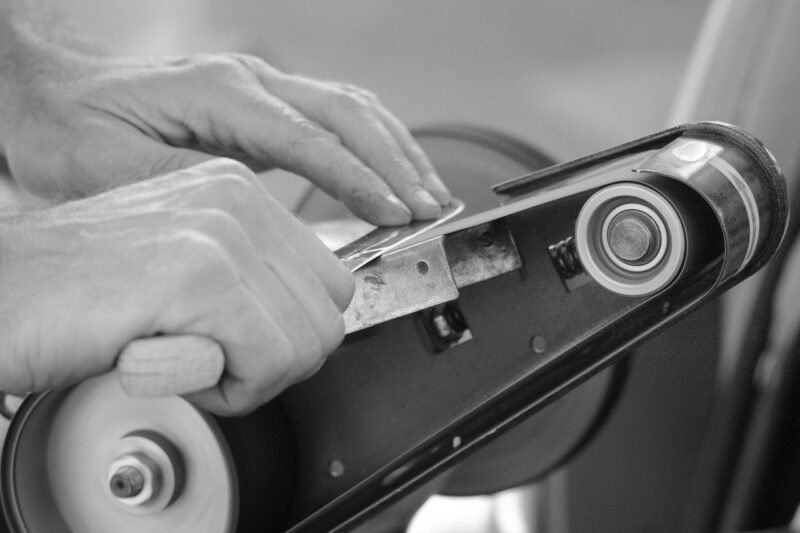
- Knife Sharpener: Electric or manual options exist, but they can be less precise than a whetstone.
- Cloth or Towel: For cleaning and drying.
- Water: For use with the whetstone.
Preparing Your Workspace
- Safety First: Ensure your workspace is clean and free from distractions. Always keep a first-aid kit handy in case of minor accidents.
- Setting the Whetstone: Place it on a non-slip surface or use a wet towel underneath it to prevent sliding.
- Soak the Whetstone: If you’re using a water stone, submerge it in water for about 10-20 minutes before sharpening it. This allows for effective sharpening and prevents the stone from clogging up with metal shavings.
Step 1: Assessing the Knife’s Condition
Before sharpening, check the knife’s condition. Look for signs of wear such as chips or significant dullness. A flat blade without visible damage can be sharpened easily, while a knife with chips may require more effort or specialized tools.
Step 2: Understanding the Edge Angle
Most kitchen knives have an edge angle of between 15 and 20 degrees. A higher angle (20 degrees) is more suitable for heavy-duty knives, while a lower angle (15 degrees) is best for precision knives. Knowing the appropriate angle ensures efficient sharpening.
Step 3: Sharpening with a Whetstone
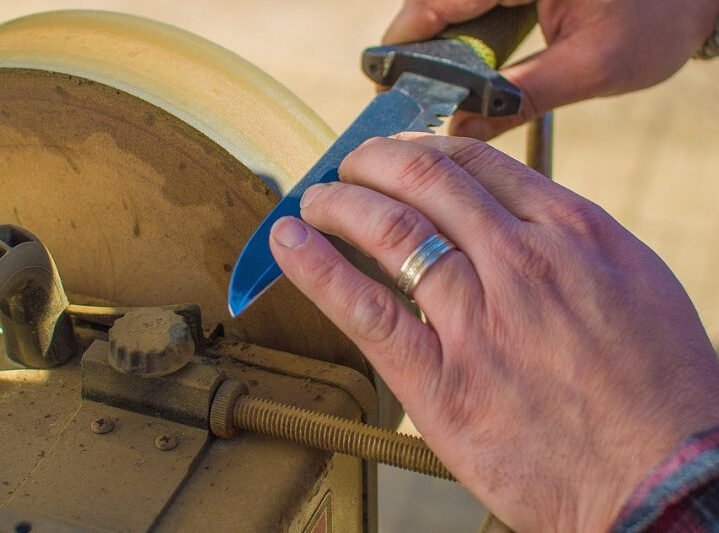
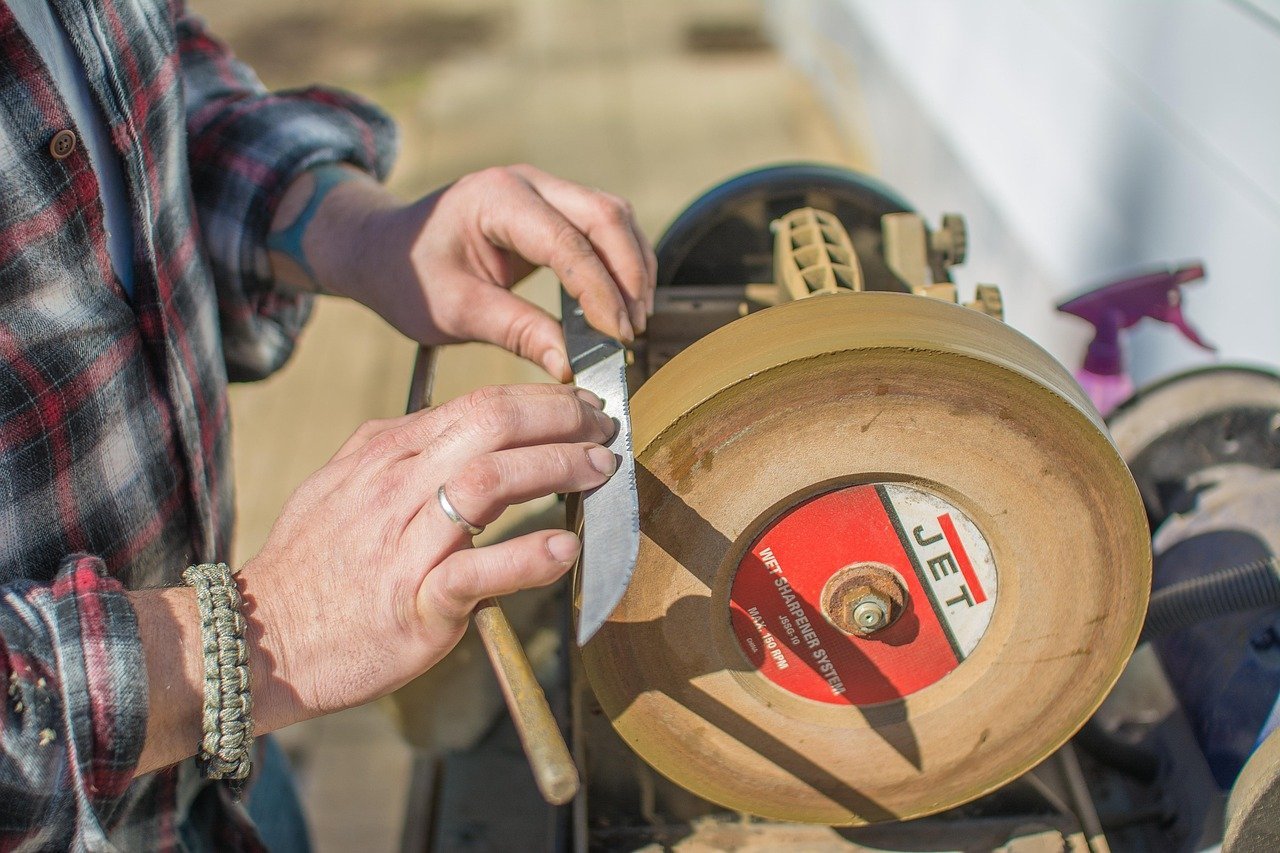
Position the Knife: Hold the knife at the desired angle against the whetstone.
Coarse Side First: Start with the coarse side of the whetstone. Use a sweeping motion, starting from the heel to the tip.
- Technique: Apply light pressure as you slide the knife across the stone.
- Stroke Length: Use long, smooth strokes, covering the entire blade. Aim for about 5-7 strokes on one side before flipping the knife.
Switching Sides: After sharpening one side, flip the knife and repeat the process on the other side. Focus on maintaining the same angle throughout the strokes.
Fine Tuning: Once you have achieved an even edge on both sides, flip the whetstone to the fine side and repeat the process. This will hone the edge and polish it to a razor-sharp finish.
Step 4: Utilizing a Honing Rod
- Positioning: Hold the honing rod vertically with the tip resting on a stable surface, like the countertop.
- Knife Placement: Angle the knife at 15-20 degrees against the honing rod.
- Honing Motion: Swipe the blade down the rod, starting at the heel and moving to the tip. Repeat this motion 5-10 times on each side.
- Honing Regularly: Incorporate honing into your regular kitchen routine to maintain sharpness between sharpenings.
Step 5: Cleaning and Storage
- Cleaning the Blade: After sharpening, clean the knife using warm soapy water to remove any metal filings and debris. Dry it with a towel carefully.
- Whetstone Maintenance: Rinse the whetstone thoroughly and allow it to dry completely before storing.
- Storing the Knife: Store knives in a block, on a magnetic strip, or with blade guards to protect the edges from damage and ensure safety.
Step 6: Testing the Sharpness
- Paper Test: A simple way to test sharpness is to try slicing through a piece of paper. If the knife cuts smoothly without tearing, you’ve successfully sharpened it.
- Tomato Test: Use the knife to slice a ripe tomato. A sharp knife should glide effortlessly through the skin.
- Finger Test: Lightly drag the blade across your fingernail. If it bites gently, it’s sharp enough. If it slips off, it needs more sharpening.
Maintenance Tips for Sharpening
- Frequency: Sharpen your knives every few months or as necessary, depending on usage. Regular honing will extend the time between sharpenings.
- Avoid Dishwashers: Keep knives away from dishwashers to prevent dullness caused by hitting against other items.
- Use the Right Cutting Surface: Use wooden or plastic cutting boards, as glass or stone surfaces can dull blades faster.
Common Mistakes to Avoid
- Using Too Much Pressure: Applying excessive pressure can damage the edge. Use a light touch while sharpening.
- Incorrect Angle: Maintaining the wrong angle can lead to uneven sharpening. Always be consistent with your chosen angle.
- Neglecting Regular Maintenance: Regular honing and cleaning, combined with careful storage, ensures longevity and peak performance of your kitchen knives.
Conclusion of Key Techniques
Sharpening your kitchen knives is a vital skill that ensures precision in your cooking tasks. By following these detailed steps meticulously, you can maintain a sharp edge that enhances your kitchen experience and promotes safety. Remember, practice makes perfect, and over time, you will refine your technique and enhance your skills in food preparation.