


Knife Sharpening Tools: Essential Gear for Every Kitchen
Understanding Knife Sharpening
A sharp knife is a fundamental tool for any chef or home cook, essential for safety and efficiency in the kitchen. Regular maintenance ensures your knives perform their best, making knife sharpening a necessary skill. To achieve the best results, using the appropriate tools is crucial.

Types of Knife Sharpening Tools
1. Whetstones (Sharpening Stones)
Whetstones, often made from silicon carbide or aluminum oxide, are a traditional method of sharpening knives. They come in various grits, typically ranging from coarse (200-600 grit) to fine (1000-3000 grit) and ultra-fine (4000-8000 grit).
- Coarse Grit: Ideal for fixing nicks or damaged edges.
- Medium Grit: Suitable for general sharpening and maintenance.
- Fine Grit: Perfect for honing and achieving a razor-sharp edge.
To use a whetstone, soak it for about 10-15 minutes, place it on a non-slip surface, and maintain a consistent angle (usually between 15-20 degrees) while sliding the knife blade across the stone.
2. Diamond Sharpeners
Diamond sharpeners feature a steel or ceramic base coated with diamond abrasives. Known for their durability and speed, these tools can quickly reshape edges and hone blades to a fine finish.
Diamond sharpeners are available as flat plates or handheld rods. The advantages of diamond sharpeners are their ability to sharpen harder steel knives and the minimal need for maintenance.
3. Honing Rods
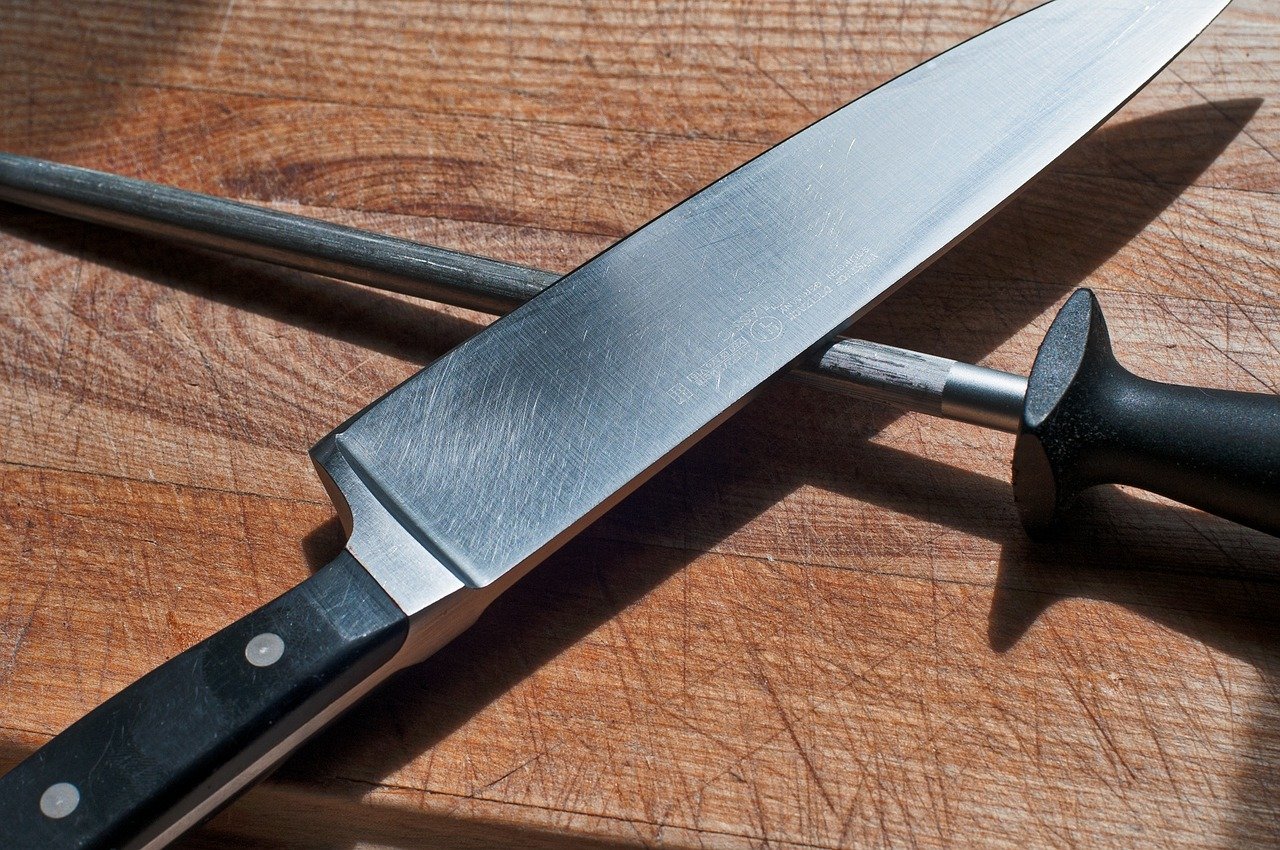
Honing rods, often made of ceramic or steel, are used to realign the edge of a knife rather than remove material. Regular honing helps maintain sharpness and is an essential step in knife care.
Honing should be performed after every few uses of the knife. It is important to hold the honing rod vertically with the pointed end down and slide the knife down the rod, ensuring a consistent angle.
4. Electric Knife Sharpeners
Electric sharpeners are convenient tools that automate the sharpening process. Generally, they come with preset angles and grit levels, making them user-friendly.
While convenient, they may not be suitable for all types of knives. Certain high-end blades may require manual sharpening for optimal care.
5. Pull-Through Sharpeners
Easy to use, pull-through sharpeners utilize a two-step process – a rough side for grinding and a fine side for honing. They’re portable and quick, making them ideal for everyday cooks.
Though convenient, pulling too hard can damage the knife blade. Moreover, some models may not maintain the original edge’s integrity, particularly on high-quality knives.
Choosing the Right Knife Sharpening Tools
When selecting a sharpening tool, consider the type of knives in your kitchen. High-carbon stainless steel knives may require a finer honing tool, while ceramic knives may need a dedicated ceramic sharpening tool.
Additionally, consider your skill level. Whetstones may have a learning curve, while electric and pull-through sharpeners offer ease of use for beginners.
Maintaining Your Sharpening Tools
Regardless of the sharpening method chosen, maintaining your tools is essential for peak performance.
- Whetstones: Clean after each use with water or a soft brush. Store in a dry place to prevent deterioration.
- Diamond Sharpeners: Wipe down with a damp cloth to remove metal shavings and debris.
- Honing Rods: Wipe after use; however, they may require more thorough cleaning if used with sticky foods.
Tips for Knife Sharpening
- Angle Consistency: Keep a consistent angle while sharpening to avoid damaging the blade.
- Pressure Application: Use gentle pressure when sharpening to ensure you don’t over-grind the blade.
- Check the Edge: Feel for sharpness by running the blade against your thumb (with care) or cutting through soft produce.
- Regular Maintenance: Incorporate regular honing into your routine to prolong the sharpness between sharpening sessions.
Best Practices for Knife Care
Proper knife care extends beyond sharpening. Always hand wash your knives, avoiding dishwashers, to prevent damage and dulling from abrasive cleaning agents. Dry immediately after washing to prevent rust.
When not in use, store your knives in a designated block, sheath, or magnetic strip to protect the blade edges. Avoid placing knives loose in drawers, which can lead to nicks and scratches.
Recommended Brands and Products
- Shun Whetstones: Known for quality and fine sharpening, ideal for high-end kitchen knives.
- DMT Diamond Sharpeners: They offer a wide range of diamond sharpening products that cater to various blade types.
- Chef’sChoice Electric Sharpeners: Popular for their user-friendliness and precision in sharpening.
- Victorinox Pull-Through Sharpener: A reliable choice for quick touch-ups on kitchen knives.
Conclusion
Investing in high-quality knife sharpening tools is an investment in your culinary skills. Whether you choose whetstones for precision or electric sharpeners for simplicity, understanding how to use and maintain these tools is key to ensuring that your knives remain sharp, safe, and effective for all your cooking needs. Consider your kitchen’s specific needs and regularly commit time to sharpening, ensuring a seamless cooking experience.