


DIY Blade Sharpener: How to Make One at Home

Understanding Blade Sharpness

A sharp blade is essential for efficiency and safety in various tasks, from cooking to woodworking. When a blade loses its edge, it can lead to poor performance and increased risks of accidents. Creating a DIY blade sharpener allows you to maintain your tools effectively at home, ensuring they are always ready for use.

Materials Needed
- Base Material: A piece of wood (1″x6″x12″) or a solid plastic cutting board.
- Sharpening Materials:
- A sharpening stone (whetstone)
- A diamond sharpening plate
- A set of metal files
- Mounting Hardware:
- Screws
- Wood glue (if using a wooden base)
- Handle: A wooden dowel or a plastic grip for easy handling.
- Measuring Tools: Ruler, protractor, or digital angle finder for precision.
- Sandpaper: For smoothing out surfaces.
- Clamps: To secure your sharpener while in use.
Preparing the Base
Cut the Base: Start with a wooden board or plastic piece. The dimensions should ideally be 12 inches by 6 inches, providing enough space for blade sharpening without taking up much room.
Sanding: Use sandpaper to smooth the edges and surfaces of the base. This will prevent splinters and ensure a comfortable handling experience.
Affixing the Sharpening Element:
- If you’re using a wet stone, cut a groove in the center of the base that matches the width of the stone, allowing for stability.
- For a diamond plate, you can simply glue or screw it directly onto the base. Ensure it’s securely attached for effective use.
Angle Setting Device
Most blades require a specific sharpening angle (15-20 degrees for kitchen knives, 20-30 degrees for outdoor tools). To create a consistent angle guide:
Create an Angle Jig: Using scrap wood, create an angled platform. Use a protractor to measure and set the correct angle.
Affix the Jig: Attach this jig to the base where the blade will rest while sharpening.
Secure the Jig: You might want to use clamps to ensure the jig remains stable during the sharpening process.
Making a Handle
Cut the Handle: If using a wooden dowel, cut it to a length of approximately 6 inches. If using a plastic grip, ensure it fits comfortably within your hand.
Attach the Handle: Use screws and wood glue to attach the handle to the side of the base. Place it far enough from the sharpening area to avoid any accidents.
Incorporating a Guide
To keep the blade perpendicular to the sharpening stone:
Create a Blade Guide: Use a small metal or hardwood block. Mount it vertically on the base adjacent to the sharpening area.
Height Adjustment: The guide should allow for the blade to rest against it at the desired angle. Check that it does not interfere with your sharpening stroke.
Testing Your Sharpener
Prepare a Test Blade: Use an older knife or tool to avoid damaging your good blades while testing.
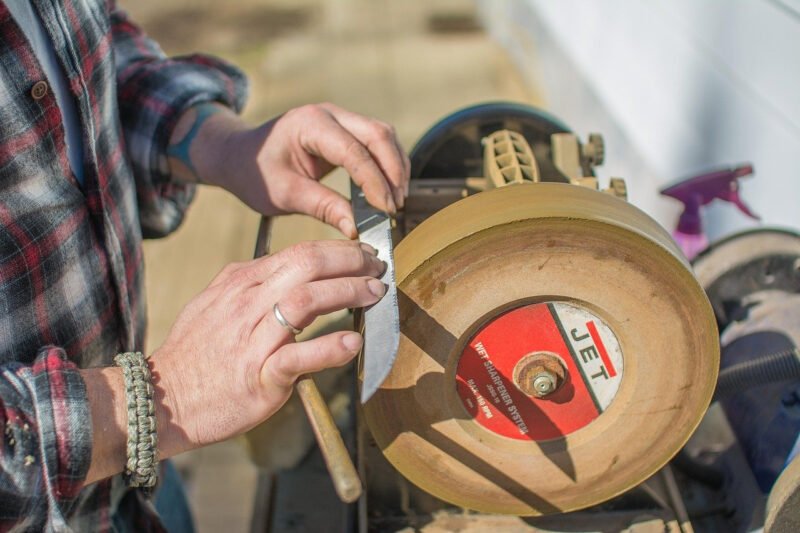
Sharpening Technique: Following the angle preset, push the blade against your sharpener in smooth strokes. Always maintain a consistent pressure and angle.
Evaluate the Results: Test the blade’s sharpness through simple cutting tasks. Adjust your technique and the setup as necessary.
Safety Precautions
- Wear Gloves: Always wear protective gloves while working with sharp blades.
- Keep Your Work Area Clean: Ensure there are no distractions or debris that could interfere with your sharpening process.
- Secure the Blade: Always keep the blade pointed away from your body during sharpening.
- Check Stability: Before starting, ensure everything is stable and secure to prevent accidents.
Maintenance of Your DIY Sharpener
- Regular Cleaning: Clean the sharpening stone or plate after each use.
- Check for Wear: Inspect your sharpener regularly for any signs of wear and tear. Replace materials as needed.
- Keep it Dry: Store your sharpener in a dry location to avoid rusting or damage.
Customization Ideas
- Multi-Functional Sharpening: Consider adding various angles by incorporating interchangeable jigs for different blade types.
- Incorporate Water: For extra effectiveness, you can build a small reservoir for water, ensuring your whetstone stays wet during sharpening.
- Add a Storage Compartment: Create a small drawer in the base to keep other sharpening tools or accessories organized.
Final Thoughts
Building your DIY blade sharpener not only saves money in the long run, but it also gives you a chance to learn more about your blades and tools. With this guide, you can create a customized sharpening system tailored to your specific needs, enhancing both your tool longevity and cutting performance. The right equipment can make all the difference in maintaining sharp, safe blades ready to tackle any task.