


Understanding the Importance of Knife Sharpening
Maintaining sharp kitchen knives is essential for any home chef. A dull knife can be dangerous and inefficient, leading to accidents and frustration. A properly sharpened blade ensures precision, control, and reduced risk of injury when preparing meals. By learning DIY knife sharpening techniques, you can extend the life of your knives and improve your culinary skills.
Types of Knife Edges
When you embark on your knife sharpening journey, it’s important to know that different knives come with various edge designs. The most common types include:
- Straight Edge: The most frequently used in kitchen knives, ideal for general slicing and dicing.
- Serrated Edge: Found on bread knives, these have a toothed design that can grip and slice through crusty surfaces.
- Japanese-style Edges: These may have a single bevel and require specific sharpening techniques due to their unique geometry.
Understanding your knife’s edge will better inform your sharpening approach.
Tools for Knife Sharpening
Before diving into sharpening techniques, gather your tools. Common knife sharpening tools include:
- Whetstone: A traditional sharpening tool that requires water or oil as a lubricant. They come in different grits – typically ranging from coarse (200-600 grit) to fine (1000-3000 grit).
- Honing Rod: Often made of steel, ceramic, or diamond, honing rods are designed to realign the edge of the blade rather than sharpen it.
- Sharpening Steel: A form of honing rod that helps maintain an already sharp knife.
- Electric Knife Sharpener: A user-friendly option that requires minimal skill but may not provide as fine a sharpening as a whetstone.
- Angle Guide: Helpful for maintaining the correct angle while sharpening, crucial for effective sharpening.
Choosing the Right Tool
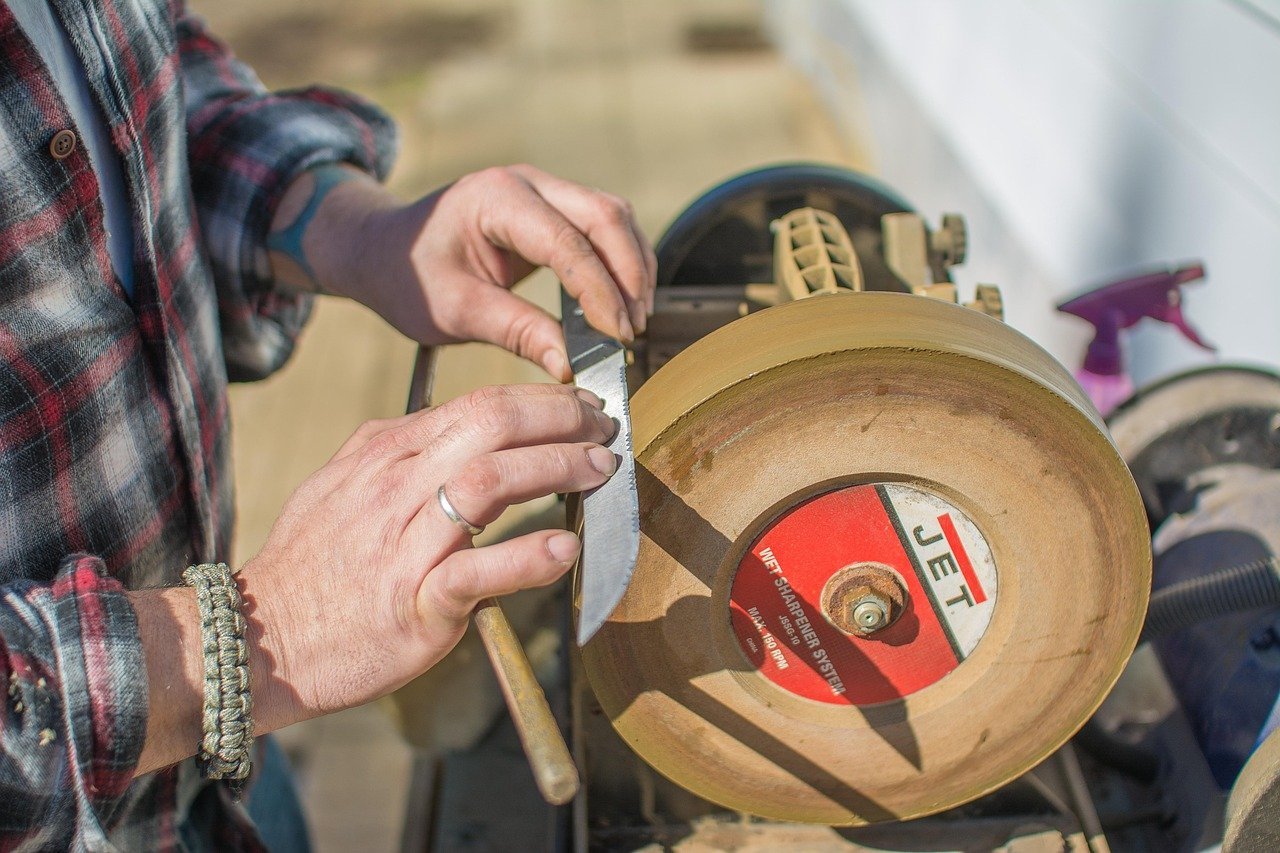
The right tool depends on your knives and personal preferences. Whetstones are favored for their versatility and ability to create a finely honed edge, while electric sharpeners are perfect for those who need a quick solution.
Mastering Knife Sharpening Techniques
1. Using a Whetstone
Preparation
- Soak the Whetstone: If using a water stone, soak it for about 10-15 minutes before use. For oil stones, apply a thin layer of honing oil.
Sharpening Procedure
- Establish the Angle: A standard angle for most kitchen knives is 20 degrees. If you have a Japanese knife, aim for 15 degrees.
- Find Your Grip: Hold the knife firmly by its handle, placing your other hand on the blade for control.
- Sharpening Motion: Starting at the heel of the blade, move it towards the tip in a sweeping motion. Apply light pressure, making sure to maintain the chosen angle throughout the stroke. Alternate sides after 5-10 strokes.
Testing for Sharpness
To check if the knife is sharp, perform a simple paper test. A sharp knife will slice through a piece of paper with minimal resistance. If it tears, continue sharpening.
2. Using a Honing Rod
Honing is best done frequently, ideally before each use, to maintain the edge.
Technique
- Positioning: Hold the honing rod vertically, with the tip resting on a non-slip surface.
- Angle Maintenance: Similar to sharpening, maintain a 15-20 degree angle with the knife blade.
- Stroke Motion: Start with the heel of the knife at the base of the honing rod and swipe down towards the tip. Repeat this process for each side of the blade 5-10 times.
3. Using Electric Knife Sharpeners
For those who prefer convenience, electric sharpeners can offer an efficient solution.
Procedure
- Select the Grit Setting: Many electric models allow you to choose different settings for different levels of sharpening.
- Feed the Knife: Place the knife in the designated slot, applying gentle pressure.
- Follow Instructions: Adhere to the manufacturer’s recommendations for the best results.
Regular Maintenance and Care
1. Keep Your Knives Clean
Regular cleaning helps preserve your knife’s sharpness. After use, wash your knives by hand with mild soap and warm water. Never place them in the dishwasher, as this can dull the blade and damage the handle.
2. Use Proper Cutting Surfaces
Always use cutting boards made of wood or plastic. Avoid glass and stone surfaces that can quickly dull blades. Investing in a good chopping board can enhance both the maintenance of your knives and your cooking experience.
3. Storing Knives Properly
Store knives in a way that protects their edges. Using a knife block, magnetic strip, or blade guards can prevent dulling and ensure safety in your kitchen.
4. Hone Regularly
Honing should be done daily or before each use, while sharpening can be done less often—typically every few months, depending on usage. Regular honing realigns the blade edges, reducing the need for frequent sharpening.
Identifying When to Sharpen
Knowing when to sharpen is crucial. Signs that your knife needs sharpening include:
- Poor Performance: Difficulty slicing through vegetables or meats.
- Increased Pressure: Needing to apply more force than usual.
- Visual Inspection: Nicks or chips visible on the blade.
Advanced Techniques and Tips
Freehand Sharpening: For those comfortable with their skills, practicing freehand sharpening on a whetstone can enhance your technique and control. Focus on muscle memory to maintain the correct angle.
Japanese Water Stones: For a finely polished edge, opt for a dual-sided water stone. The technique remains similar to the basic whetstone method, but the finer grit can yield superior results.
Experiment with Angles: Adjusting the sharpening angle can create different edge characteristics. For instance, a sharper angle (around 15 degrees) is suited for delicate tasks like slicing fish, while a more obtuse angle (around 20 degrees) excels in general kitchen tasks.
Regularly Assess Your Technique: As you sharpen, take a moment to evaluate your results. If your knives frequently feel dull, reconsider your technique, maintenance, and tools used.
Consult Online Resources: Extensive video tutorials are available online, illustrating various sharpening techniques that can bolster your skills.
By incorporating these DIY knife sharpening tips and tricks, you will enhance your knives’ performance, ensuring they serve you well in every culinary endeavor. Armed with proper knowledge and practice, you can achieve professional-grade sharpening right in your own kitchen.