


Step 1: Gather Your Materials
Before starting the sharpening process, ensure you have the right materials. The main tool you need is a whetstone, which typically comes in various grits ranging from coarse (around 200) to fine (up to 8000). You should also have water or honing oil (depending on the type of whetstone), a cloth for cleaning, and of course, the knife you wish to sharpen.
Step 2: Choose the Right Whetstone
Selecting the appropriate whetstone is crucial. If the knife requires significant sharpening, start with a coarse grit stone (200-600). If the blade is only dull and needs a touch-up, a medium grit (1000-3000) or fine grit stone (4000-8000) will be sufficient. A double-sided whetstone can provide versatility, offering both coarse and fine grits.
Step 3: Soak the Whetstone
If you are using a water stone, soak it in water for about 10-15 minutes before sharpening, ensuring that it is fully saturated. For oil stones, apply honing oil to the surface. This lubrication helps to create a smoother sharpening experience while preventing damage to both the stone and the knife.
Step 4: Position the Whetstone
Place the whetstone on a stable and non-slip surface. If your stone does not have a non-slip base, consider placing a damp cloth underneath to prevent it from sliding during the sharpening process. Make sure the stone is oriented so that the coarse grit side is up if you are starting with coarse sharpening.
Step 5: Determine the Angle
Finding the correct angle is vital for effective sharpening. Most knives require a sharpening angle between 15 and 20 degrees. To gauge this angle accurately, you can use a sharpening guide if you are a beginner. Otherwise, practice holding the knife at the desired angle intuitively. Generally, for most kitchen knives, 20 degrees works effectively.
Step 6: Start Sharpening with the Coarse Grit
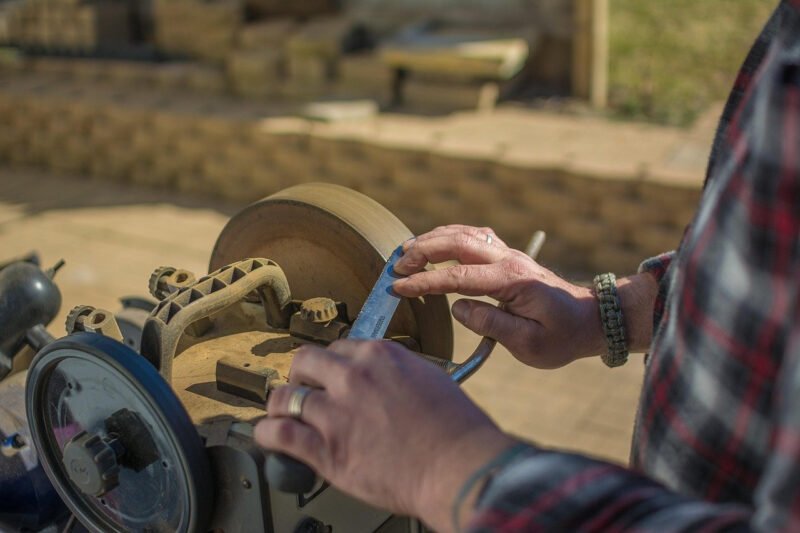
Begin by placing the knife’s heel (the part closest to the handle) against the whetstone at the desired angle. Apply gentle pressure and push the blade forward and across the stone, moving from the heel to the tip in a fluid motion. Use consistent strokes and maintain the angle throughout. Repeat this process around 5-10 times for each side of the blade.
Step 7: Check Your Work
After sharpening both sides with the coarse grit, check the edge. You’re looking for a uniform bevel along the blade. If any burrs (small rust or debris) appear on one side, it indicates that sharpening is uneven, and you should continue to work on the side with the burr until it’s smooth.
Step 8: Move to Medium Grit
Flip the whetstone to the medium grit side. This grit will refine the edge you formed with the coarse grit and further smooth it out. Again, keep the knife at the same angle, applying the same forward push technique across the stone. Repeat this process for both sides of the blade, ensuring to maintain even pressure and angle throughout.
Step 9: Sharpen with Fine Grit
Once you’re satisfied with your work on the medium grit, transition to the fine grit side for polishing. The fine grit will give the blade a sharp edge and refine any roughness. As before, keep your angle consistent and use smooth, gentle strokes. Polish each side uniformly, typically requiring fewer strokes than the coarser grits.
Step 10: Perform a Final Check
Inspect the blade after fine-gritting. You should be looking for a polished, reflective edge without any significant burrs or rough sections. If you still feel slight resistance when using the blade on your fingernail, continue honing the edge lightly until it passes the test.
Step 11: Clean the Whetstone
Once you finish sharpening, clean the whetstone by rinsing it under running water to remove any metal filings and debris. If using an oil stone, wipe it down with a cloth and apply a thin layer of oil for future use. This maintenance helps preserve the stone and maintain its effectiveness.
Step 12: Wipe Blade Clean
Before using your knife, wipe off any residue accumulated during sharpening with a clean cloth. This step prevents particles and debris from contaminating your food and ensures the knife is ready for immediate use.
Step 13: Test the Sharpness
To assess your sharpening effectiveness, conduct a simple sharpness test. Try slicing through a piece of paper or a tomato. If the knife glides through easily, you’ve achieved a sharp edge. If not, you may need to revisit the sharpening process, particularly focusing on your angles and pressure.
Step 14: Practice Regular Maintenance
For the longevity of your knife’s edge, integrate a regular maintenance routine. Ideally, lightly hone your knife with the fine side of the whetstone after significant use to maintain its sharpness. Depending on frequency of use, full sharpenings might only be necessary every few months.
Step 15: Store Your Knife Properly
Blade safety and longevity are also determined by how you store your sharpened knives. Use a knife block, magnetic strip, or blade guard to keep your knives protected from damage and also prevent dulling from contact with other kitchen tools.
Step 16: Consider Professional Help
If you’re unsure of your sharpening abilities or if your knife is particularly expensive, consider seeking professional sharpening services occasionally. This will ensure that the knife receives expert care, prolonging its life and performance.
Final Tips for Successful Sharpening
- Consistency is Key: The most consistent strokes yield the best results. Avoid rushing through the process for a good finish.
- Control Your Pressure: Start with light pressure and increase it gradually. Overly aggressive sharpening can remove too much material.
- Sharpen Regularly: Don’t wait until the knife becomes extremely dull before sharpening. Regular maintenance leads to less work overall.
- Stay Focused: Pay attention to your technique, angle, and pressure during sharpening. Distractions can lead to uneven sharpening and damage.
By following these steps and tips, you can improve your knife sharpening skills using a whetstone, ensuring that your knives remain sharp, effective, and ready for culinary use.