



Understanding Knife Sharpening
Knife sharpening involves refining the edge of a blade to ensure effective cutting performance. A sharp knife is safer than a dull one; it requires less force to cut, reducing the risk of slipping and injuries. For beginners, it’s crucial to know various techniques and tools for DIY knife sharpening, as well as safe practices.
Types of Knife Edges
Before diving into sharpening methods, it’s essential to understand the different types of knife edges:
- Straight Edge: Typically used in chef’s knives, this edge is ideal for precision cuts.
- Serrated Edge: Found on bread knives, serrated edges are designed to cut through tougher surfaces.
- Hollow Ground: Often seen in high-quality knives, the blade’s edge is ground inward, creating a sharp and thin edge.
- Convex Edge: Eased into a rounded shape, this edge is great for heavy-duty usage.
Selecting the Right Tools
Investing in the right sharpening tools is crucial. Here are some popular options:
Whetstone: A classic method that provides great control. Choose a stone with two sides: a coarse grit for reshaping the edge and a fine grit for honing.
Honing Steel: Also known as a honing rod, this tool can maintain a blade’s edge between sharpenings. It aligns the edge rather than sharpening it.
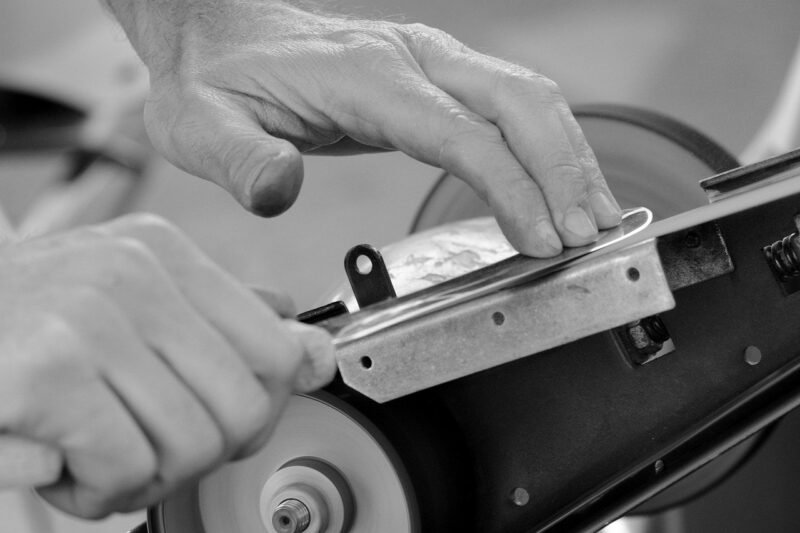
Electric Sharpeners: Quick and user-friendly, they are excellent for those looking for an easy option but may not provide the delicate edge a stone does.
Manual Pull-Through Sharpeners: Operate simply by pulling the knife through slots designed for different sharpening stages.
Diamond Stones: These feature a diamond coating for fast and effective sharpening.
Safety Precautions
For beginners, safety is paramount during the sharpening process. Consider these tips:
- Wear Protective Gear: Cut-resistant gloves can protect your hands from accidental slips.
- Secure the Workspace: Ensure that your sharpening surface is stable. A rubber mat can help keep stones from sliding.
- Use the Right Grip: Hold the knife by the handle firmly. Maintain control by positioning fingers away from the blade’s path.
- Stay Focused: Avoid distractions while sharpening to prevent mishaps.
Step-by-Step Guide to Using a Whetstone
Using a whetstone is a time-honored technique. Here’s how to do it safely and effectively:
Prepare the Whetstone: Begin by soaking your whetstone in water for 10-15 minutes. This helps prevent cracking and aids in the sharpening process.
Set Up Your Workspace: Place the stone on a non-slip surface, ensuring it’s stable.
Angle the Knife: Hold the knife at a 20-degree angle against the stone. A lower angle creates a sharper edge, while a higher angle is better for durability.
Start with Coarse Grit: Using moderate pressure, push the blade across the stone, moving from the heel to the tip. Repeat this motion 5-10 times. Flip the knife and repeat.
Switch to Fine Grit: After shaping the edge with coarse grit, move to a finer grit for honing. Repeat the same process with lighter pressure.
Hone the Blade: Finish by using the honing stone or steel to align the edge, maintaining control and using minimal pressure.
Using Honing Steel
Honing steel is an essential tool for maintaining a sharp knife edge. Here’s how to use it correctly:
Hold the Steel: Secure the steel vertically in one hand. Use a stable surface for support.
Position the Knife: Hold the knife at a 15-20 degree angle against the steel.
Draw the Knife Down: Starting from the heel, draw the knife down and across the steel in a sweeping motion. Repeat this on both sides of the blade several times.
Use Consistent Pressure: Ensure even pressure while moving the knife to effectively realign the edge.
Electric and Manual Pull-Through Sharpeners
For those looking for convenience, electric and manual pull-through sharpeners can be effective:
Electric Sharpeners: Follow the manufacturer’s instructions. Generally, you’ll pull the knife through the designated slots and let the machine handle the sharpening.
Manual Sharpeners: While similar in function to electric versions, manual pull-through sharpeners require you to pull the knife through the slots. Focus on a steady, slow pull for even sharpening.
Maintaining Your Knives
Regular care extends the life of your knives. Consider the following practices:
Clean After Use: Always wash and dry knives immediately after use. Avoid placing them in the dishwasher as it can dull the blade.
Store Properly: Use a knife block, magnetic strip, or protective sheaths to avoid nicks and dulling.
Regular Honing: Implement honing regularly between sharpening sessions to maintain the edge.
Limit Cutting Surfaces: Avoid cutting on hard surfaces like glass or stone. Instead, use wooden or plastic cutting boards.
Recognizing When to Sharpen
Understanding when your knife needs sharpening will make your DIY experience more effective. Signs include:
- Resistance while Cutting: If you find yourself applying excessive pressure to cut, it’s time to sharpen.
- Dullness in Feel: A knife that feels sticky or doesn’t slice smoothly needs attention.
- Visible Damage: Chips or irregularities on the blade’s edge are indicators that sharpening is necessary.
Common Mistakes to Avoid
To maximize effectiveness and safety during sharpening, avoid these common pitfalls:
Incorrect Angle: Not maintaining the proper angle can lead to a poorly shaped edge or damage to the blade.
Too Much Pressure: Applying excessive force can chip the edge. Let the tool do the work instead.
Neglecting to Clean: Failing to clean your blade and sharpening tools can lead to grime build-up, affecting performance.
Sharpening in the Wrong Direction: Always sharpen in a controlled motion away from yourself, keeping the blade from slipping toward your body.
Resources and Community Support
As a beginner, utilizing online resources can greatly enhance your skills. Websites, forums, and YouTube channels dedicated to knife sharpening can provide useful demonstrations and guidance. Additionally, visiting a local knife shop or attending workshops can offer hands-on experience and expert advice.
Conclusion
Mastering the art of knife sharpening takes practice and patience but is incredibly rewarding. By adhering to safe practices and understanding the intricacies involved, beginners can sharpen their knives effectively, ensuring not only a better cutting experience but also a more enjoyable cooking journey.