


How to Maintain Your Knives: Sharpening Tips for Newbies
Understanding Knife Anatomy
Before delving into the art of knife sharpening, it’s crucial to understand the basic parts of a knife. Familiarize yourself with the blade, edge, spine, handle, bolster, and tang. Each of these components plays a role in the knife’s performance and longevity.
- Blade: The main part of the knife used for cutting.
- Edge: The sharpened part of the blade that performs the cutting.
- Spine: The top of the blade opposite the edge, often thicker to provide strength.
- Handle: The part held during use, which can affect comfort and control.
- Bolster: The thick junction between the handle and the blade that adds weight and balance.
- Tang: The portion of the blade that extends into the handle, providing stability.
Why Sharpening is Important
A sharp knife is not just a tool; it enhances safety and efficiency in the kitchen. Dull knives require more pressure, increasing the risk of slips and accidents. Regular sharpening maintains the edge’s integrity, ensuring a clean cut, which is particularly important for vegetables, fruits, and proteins.
When to Sharpen Your Knives
Knowing when to sharpen your knives is as critical as the sharpening process itself. Here are some signs that your knife needs maintenance:
- Visual Inspection: If the edge looks rounded or dull, it’s time for a sharpen.
- Cutting Performance: If it struggles to slice through soft ingredients like tomatoes or herbs, consider sharpening.
- Feeling Resistance: If you feel significant drag when cutting, it’s a telltale sign.
Regular upkeep is recommended, typically every 1-3 months, depending on usage frequency.
Tools for Sharpening Knives
- Whetstone: Known for providing a precise edge, whetstones come in various grits for different sharpening needs.
- Honing Rod: Not a sharpener in the traditional sense, honing rods realign the edge, making it useful for maintaining sharpness between grindings.
- Electric Sharpener: Easiest for beginners; they typically come with preset angles. However, they might strip more metal than necessary.
- Manual Pull-Through Sharpener: These provide a quick way to sharpen but may not offer the finesse of whetstones.
Sharpening Techniques
Whetstone Method
Prepare the Whetstone: Soak your whetstone in water for about 10-15 minutes. A wet stone reduces friction and generates less heat.
Identify the Angle: Most kitchen knives require a sharpening angle between 15-20 degrees. Use a protractor to set your angle or visually estimate.
Sharpening Technique:
- Start with Coarse Grit: If the knife is very dull, begin with a coarse grit (around 200-600 grit).
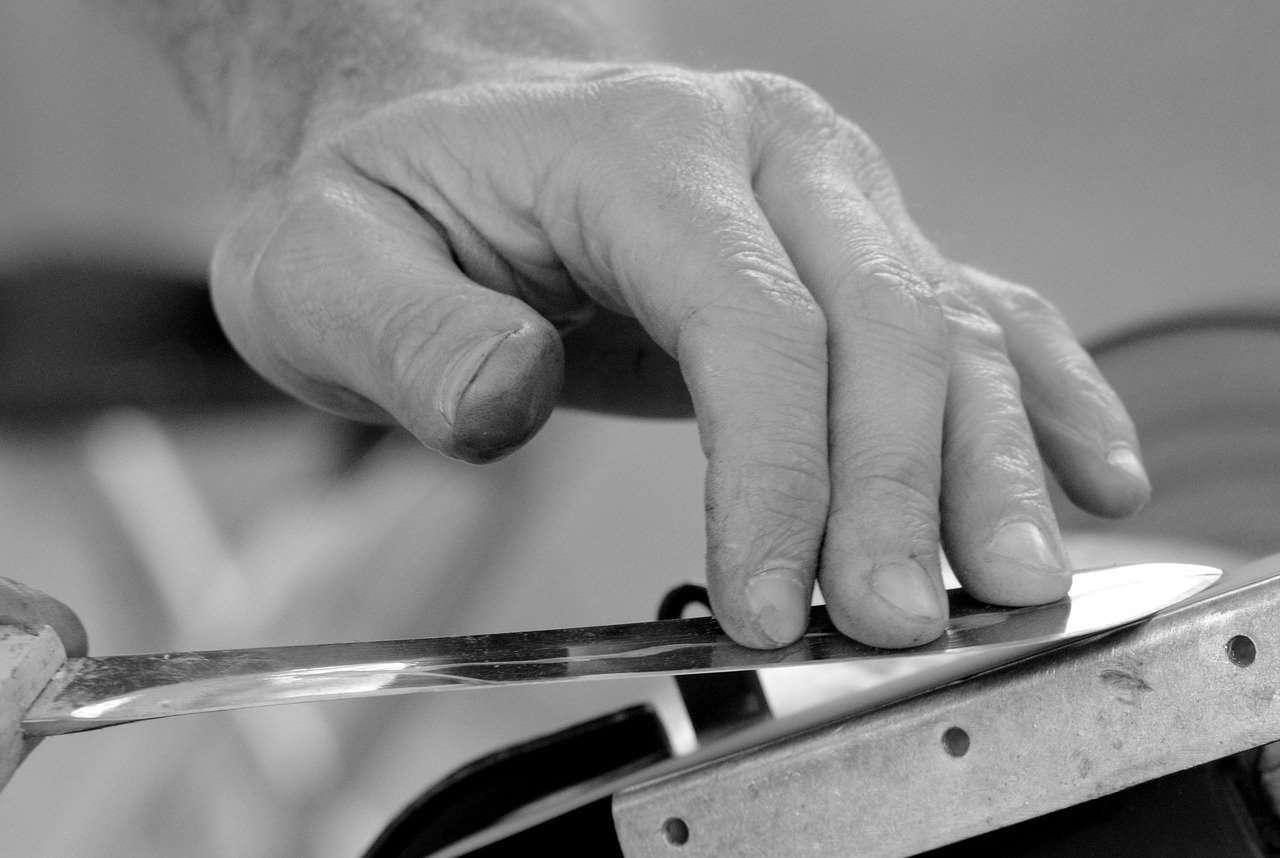
- Maintain Consistency: Hold the knife at the established angle and push the blade across the stone, using a sweeping motion as if slicing off a thin layer.
- Alternate Sides: After sharpening one side for about 5-10 strokes, switch to the other side, maintaining the same angle.
- Fine Grit Refinement: Once the edge is reshaped, switch to a finer grit (around 1000-3000 grit) to polish the edge and remove any burrs formed in the previous step.
Honing: After sharpening, use a honing rod to realign the knife edge. Hold the rod vertically and swipe the blade down the rod at the same angle used during sharpening, about 4-6 times on each side.
Using a Pull-Through Sharpener
Position the Sharpener: Place it on a stable surface.
Insert the Knife: Slide the knife through the designated slots, applying gentle pressure. Many sharpeners have different slots for coarse and fine sharpening.
Repeat: Pull the knife through the sharpener 5-7 times to achieve desired sharpness.
Electric Sharpener Process
Read Instructions: Each electric sharpener is different; refer to the user manual for specific guidelines.
Insert the Knife: Place the knife in the designated slot, ensuring it’s properly aligned.
Activate the Machine: Turn on the sharpener, allowing the blade to be sharpened as you pull it through the slot.
Maintenance and Care
Regular Honing: To prolong the life of your sharpened knife, hone it regularly before and after use. This helps in maintaining the sharpness of the edge.
Proper Storage: Always store knives in a designated block, sheaths, or magnetic strips to prevent dullness and damage. Avoid tossing around in drawers.
Cleaning: Hand wash knives gently with mild soap and dry them immediately. Never soak or place in a dishwasher as this can damage the blade.
Avoid Hard Surfaces: Never cut on glass or stone surfaces; always use wooden or polyethylene boards to extend the life of the blade.
Inspect the Knife: Regularly check for any nicks or bends in the blade and seek professional sharpening if needed.
Understanding Different Knife Types
Different knives may require unique sharpening techniques:
- Chef’s Knife: The standard sharpening process on a whetstone will suffice.
- Serrated Knife: A specialized serrated sharpener or a ceramic honing rod helps maintain the serrated edge.
- Japanese Knives: Often, these require more delicate handling, and sharpening might necessitate a slightly different angle (usually around 15 degrees).
FAQs about Knife Maintenance
How often should I sharpen my knives?
- This depends on the frequency of use. If you’re using your knives daily, aim for sharpening every month.
Can I sharpen all types of knives with whetstones?
- Yes, most knives can be sharpened using whetstones, though you should be mindful of specific techniques required for different blade types.
What’s the difference between honing and sharpening?
- Honing realigns the edge of a knife while sharpening reshapes it. Regular honing can reduce the need for frequent sharpening.
Is it necessary to use oil with whetstones?
- Water is generally recommended, but some prefer oil. Read your manufacturer’s instructions to determine the best method for your stone.
Can I sharpen my knives if I’m not skilled?
- Absolutely! With practice and the right tools, knife sharpening skills can be developed. Start with easier techniques, like pull-through sharpeners, and gradually progress to whetstones.
By understanding the fundamentals of sharpening, you can greatly extend the life of your kitchen knives while elevating your culinary experience. Whether you choose to sharpen your knives yourself or seek professional help, maintaining the edges is an essential skill for every home cook.