


Understanding Knife Anatomy
Before diving into the sharpening techniques, it’s crucial to understand the anatomy of a kitchen knife. The main components include:
- Blade: The cutting edge of the knife, typically made from steel (stainless, carbon, or ceramic).
- Edge: The sharpened side of the blade where the cut happens. It can be beveled differently based on the knife type.
- Heel: The rear part of the blade, useful for cutting tasks that require force.
- Tip: The front end, ideal for intricate cuts.
- Spine: The top part of the blade, opposite the edge, contributing to the knife’s weight and balance.
- Handle: Where you grip the knife. It should offer comfort and control.
Why Sharpening Matters
A sharp knife enhances efficiency, safety, and precision in the kitchen. Dull knives require more force, increasing the risk of slips and accidents. Regular sharpening maintains the integrity of the knife, prolongs its lifespan, and improves the quality of your culinary creations.
When to Sharpen Your Knife
Here’s a guideline to determine when your knife needs sharpening:
- Visual Inspection: Look for visible nicks or notches. If the blade doesn’t glisten, it’s time to sharpen.
- Paper Test: Try slicing through a piece of paper. If it tears instead of slicing cleanly, the knife is dull.
- Tomato Test: Use the knife on a ripe tomato. A sharp knife should effortlessly cut through the skin.
Different Sharpening Techniques
Sharpening can be achieved through various techniques and tools. Each method has its advantages and comes down to personal preference.
1. Whetstone Sharpening
Materials Needed:
- Whetstone: Usually dual-sided with different grits (coarse and fine).
- Water or Oil: Depending on the type of whetstone. Oil stones require honing oil; water stones need soaking in water.
Steps:
- Preparation: Soak the whetstone (if it’s a water stone) for about 10-15 minutes.
- Positioning: Place the whetstone on a non-slip surface.
- Angle: Hold the knife at a 20-degree angle to the stone. This angle varies depending on the knife type (15 degrees for Japanese knives, for example).
- Sharpening: Start at the heel and draw the blade down toward the tip using even pressure. Repeat 5-10 times on each side.
- Finishing: Switch to the finer side of the whetstone and repeat the process to refine the edge.
2. Honing Rod (Steel)
Materials Needed:
- Honing Rod: Available in steel, ceramic, or diamond-coated.
Steps:
- Hold the Rod: Securely hold the honing rod vertically.
- Angle: Position the knife at a 15-20 degree angle against the rod.
- Honing Motion: Starting at the heel, draw the knife down the rod while applying light pressure. Alternate sides after each stroke. Perform 3-5 strokes per side.
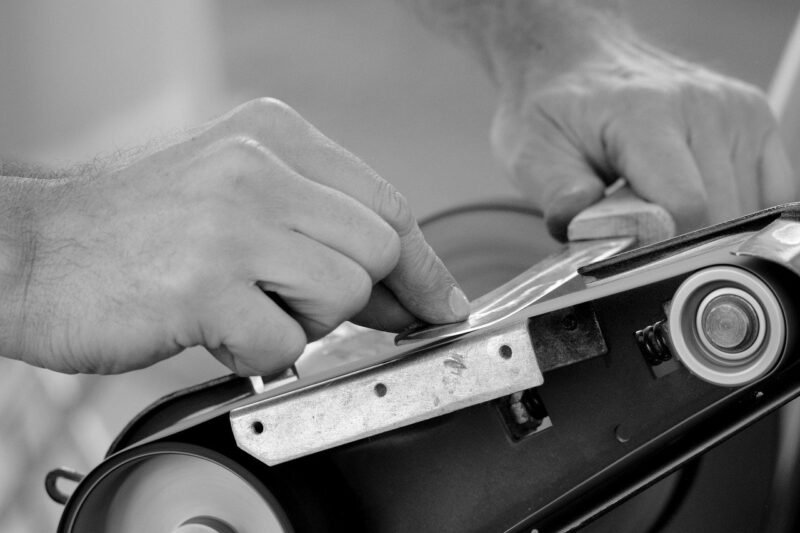
3. Electric Knife Sharpener
Materials Needed:
- Electric Sharpener: Offers multiple slots for coarse and fine sharpening.
Steps:
- Read Instructions: Each sharpener has specific guidelines. Follow them closely for best results.
- Position: Insert the knife into the sharpening slot, ensuring proper alignment.
- Sharpening: Activate the sharpener. Move the knife gently through the slots as instructed.
4. Manual Knife Sharpener
Materials Needed:
- Manual Sharpener: Similar to an electric sharpener but operated by hand.
Steps:
- Setup: Place the sharpener on a stable surface.
- Insert the Knife: Align the knife with the sharpening slot.
- Draw the Knife: Slide the knife through the slot several times, following the recommended number of passes for best results.
5. Specialty Sharpening Systems
These involve jigs and clamping mechanisms to ensure the correct angle. While they can be expensive, they provide a level of precision that can be beneficial for those with many knives.
Steps:
- Set Up the System: Follow the manufacturer’s guidelines to set it up properly.
- Clamp the Knife: Secure the knife in place, ensuring the angle is appropriate.
- Sharpen: Use the provided sharpening tools (whetstone, diamond plate, etc.) as described.
Care and Maintenance of Your Knives
Post-sharpening, proper care extends your knife’s lifespan.
Storing Knives
- Magnetic Strips: These are ideal for easy access and minimizing blade dullness.
- Knife Blocks: A good choice for safely storing multiple knives.
- Sheaths and Guards: Offer extra protection when storing in drawers.
Cleaning Knives
Always hand wash your knives using mild soap and water. Avoid using the dishwasher, as heat and moisture can warp or dull the blade.
Routine Maintenance
- Regular Honing: Hone your knives before each use to maintain their sharpness.
- Periodic Sharpening: Depending on usage frequency, sharpen your knives every few months to a year.
Troubleshooting Common Sharpening Issues
- Over-Sharpening: If you notice a curved blade, you may have over-sharpened. Adjust your angle and sharpening pressure.
- Uneven Edge: Ensure consistent pressure and angle throughout the sharpening process.
- Dull After Sharpening: If the knife doesn’t feel sharper, verify the grit of your whetstone or check the sharpening technique.
Tips for Serious Chefs
- Use the Right Tool: Different knives require different tools for sharpening. A chef knife doesn’t sharpen like a paring knife.
- Take Your Time: Rushing can lead to mistakes. Care in sharpening pays off in performance.
- Maintain A Steady Angle: Consistency in angle is crucial for achieving a straight edge.
- Frequent Practice: The more you practice, the better and faster you will become at sharpening effectively.
Conclusion
This guide equips you with the knowledge needed to sharpen your kitchen knives like a pro. Whether you prefer traditional whetstones or modern electric sharpeners, mastering the nuances of knife sharpening is essential for every avid home cook and chef. Regular maintenance, care, and the right techniques will keep your knives in top condition, enhancing your culinary endeavors.